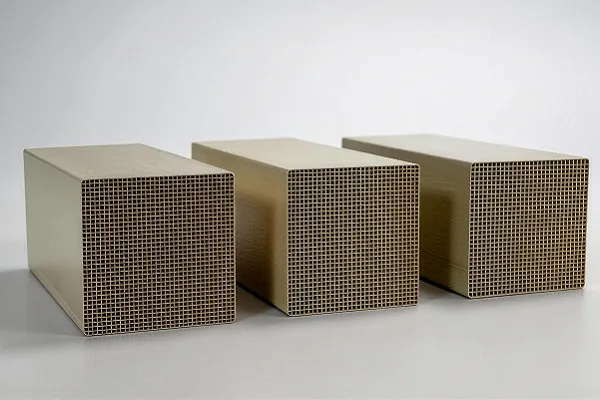
In 2026, industrial boiler operators are caught between two pressures that pull in opposite directions: tighter NOx compliance targets that demand reliable emission control, and energy cost reduction mandates that penalize any system adding fuel or electricity consumption. The tension sits precisely at the SCR selective catalytic reduction system — specifically at the SCR temperature window. Traditional high-temperature SCR catalysts require flue gas at 300°C or above to function. When the actual flue-gas temperature at the reactor location falls below that threshold — during low-load operation, after a wet scrubber, or in a tail-end retrofit layout — operators face a choice between non-compliance and reheating. Reheating means burning additional fuel or consuming electricity to raise the flue-gas temperature to the catalyst's active window. That cost is real, recurring, and in many installations, the dominant OPEX item in the entire emission control system.
Low-temperature SCR catalysts address this directly by shifting the active window down to 150°C–350°C — eliminating or substantially reducing the reheating requirement and converting what was a compliance cost into a compliance advantage.
How SCR Temperature Determines Whether You're Paying to Comply
SCR selective catalytic reduction works by injecting a reductant — ammonia or urea-derived — into the flue-gas stream upstream of a catalyst reactor. Within the catalyst's active temperature window, NOx reacts with the reductant to produce nitrogen and water. Outside that window — below the lower threshold — the reaction rate drops sharply and NOx removal efficiency falls below compliance requirements.
The practical consequence is straightforward: if the flue-gas temperature at the reactor location is below the catalyst's active window, the system either fails to meet the NOx target or requires external energy input to raise the temperature. For high-temperature catalysts with a lower activity threshold around 300°C, this creates a reheating requirement in three common scenarios:
Tail-end placement after wet desulfurization: flue gas exiting a wet scrubber is typically saturated and cooled to 50°C–80°C. Reheating to 300°C+ from this condition requires substantial energy input — gas burners, steam heat exchangers, or electric heaters — at every operating hour.
Low-load boiler operation: as boiler load drops, flue-gas temperature falls. A boiler that operates at 300°C+ at full load may drop to 200°C–250°C at 40–50% load. High-temperature SCR becomes ineffective precisely when load variability is highest.
Retrofit installations: existing ductwork layouts often cannot accommodate a hot-side SCR reactor without major civil modifications. Tail-end placement is the practical option — but only if the catalyst can operate at the available temperature.
Low-temperature SCR catalysts with an active window of 150°C–250°C — and wide-range products extending to 150°C–350°C — address all three scenarios by operating effectively at the temperatures that actually exist in the flue-gas line, without requiring the operator to add energy to meet a catalyst specification.
The Hidden OPEX: What Reheating Actually Costs
The reheating cost in a high-temperature SCR installation is rarely itemized as a line item in the compliance budget — it is absorbed into fuel consumption, utility bills, and maintenance schedules. Making it visible is the first step in building the business case for low-temperature SCR.
| Reheating Method | Direct Cost | Indirect Cost |
|---|
| Gas burner reheating | Fuel consumption per operating hour × hours/year | Burner maintenance, thermal cycling stress on ductwork and expansion joints |
| Electric reheating | kWh consumption per operating hour × electricity rate | Heater element replacement, control system maintenance |
| Steam extraction | Lost useful heat from steam cycle | Heat exchanger fouling, condensate management |
| Additional fan power | Increased ΔP from heat exchange equipment | Fan motor energy, bearing wear from higher load |
TONEXUS documents a waste incineration retrofit case where the SCR temperature at the reactor location changed from 280°C before renovation to 180°C after renovation — a scenario where high-temperature SCR would have required significant reheating to maintain compliance. Under the described conditions, the low-temperature catalyst configuration achieved gas energy consumption savings of approximately 42–51%. The structure of this case — baseline temperature profile, required reheat duty, fuel cost, and maintenance impact — is directly applicable to industrial boiler evaluations.
The reheating cost calculation for your own installation follows the same logic: map the actual flue-gas temperature at the proposed reactor location across the full load range, identify the hours per year when temperature falls below 300°C, calculate the reheat duty required to reach 300°C at those conditions, and multiply by the fuel or electricity cost. For boilers with significant low-load operating time or tail-end SCR placement, the annual reheating cost is typically the largest single variable in the SCR OPEX comparison.
Key Specifications for Low-Temperature SCR Catalyst Selection
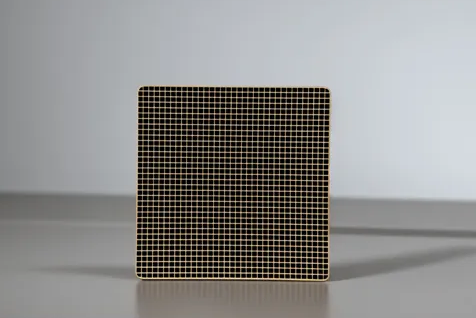
Selecting a low-temperature SCR catalyst on price alone without confirming the performance specifications that determine whether the OPEX savings are durable is the most common procurement error in this category. The following parameters must be confirmed before comparing configurations:
Active temperature window: confirm the lower and upper activity thresholds and how removal efficiency varies across the range. A catalyst rated for 150°C–250°C that shows significant efficiency drop below 180°C under real flue-gas conditions is not equivalent to one that maintains stable performance across the full stated range. For boilers with load variability, the width of the active window is as important as its position.
NOx removal efficiency: confirm the inlet NOx concentration and the required outlet concentration. The catalyst must achieve the required removal efficiency at the actual space velocity — the ratio of flue-gas flow to catalyst volume — not just at a reference condition.
Sulfur and poison resistance: flue gas from coal-fired boilers, waste incinerators, and biomass boilers contains SO₂, SO₃, alkali metals, and heavy metals that deactivate SCR catalysts over time. TONEXUS highlights sulfur resistance, alkali metal resistance, and hydrophobicity as specific design features of its low-temperature SCR catalyst — properties that determine how quickly the catalyst deactivates in real operating conditions and therefore how long the OPEX savings remain at their initial level.
Dust loading tolerance: high dust concentrations upstream of the catalyst require either upstream dust removal or a catalyst geometry and pitch designed to resist plugging. Confirm the dust loading at the proposed reactor location and verify that the catalyst specification is matched to it.
Pressure drop: the ΔP across the catalyst reactor adds to the fan load. Confirm the allowable ΔP budget and verify that the catalyst configuration meets it at the design flow rate.
Where Low-Temperature SCR Pays Back Fastest
| Application Scenario | Why Low-Temp SCR Fits | Primary OPEX Saving |
|---|
| Tail-end placement after wet desulfurization | Flue gas cooled to 50°C–80°C; reheating to 300°C+ is prohibitively expensive | Elimination of full reheating duty from scrubber outlet temperature |
| Boilers with frequent low-load operation | Temperature dips below 300°C during load reduction; high-temp SCR loses compliance | Elimination of reheating during low-load periods; stable compliance across load range |
| Waste incineration and biomass boilers | Variable fuel quality causes temperature fluctuation; tail-end placement common | Stable operation across temperature swings; documented 42–51% gas saving in retrofit case |
| Retrofit projects with limited footprint | Hot-side placement not feasible; tail-end is the only practical option | Avoidance of major civil modifications required for hot-side high-temp installation |
| Process heaters with variable throughput | Load-following operation creates temperature variability at SCR location | Reduced off-window time; fewer compliance exceedances during throughput changes |
Retrofit Checklist and TCO: Avoiding "Compliance Met, OPEX Worse" Outcomes
The retrofit evaluation sequence that prevents installing a low-temperature SCR system that meets the NOx target but introduces new cost problems:
Step 1: Map the flue-gas temperature profile at the proposed reactor location across the full operating range — minimum load, typical load, and maximum load. Identify the hours per year at each temperature band.
Step 2: Confirm whether reheating is currently used or would be required for a 300°C+ catalyst. Calculate the annual reheating cost at current fuel and electricity prices.
Step 3: Define the NOx compliance target and required margin. Confirm inlet NOx concentration and variability.
Step 4: Characterize the flue gas for catalyst poison risk: SO₂, SO₃, dust loading, alkali metals, moisture content. This determines the catalyst deactivation rate and the maintenance interval.
Step 5: Size the catalyst reactor for the design flow rate, required removal efficiency, allowable ΔP, and available footprint. Confirm sootblowing or cleaning access if dust loading is significant.
Step 6: Commission with acceptance tests: NOx inlet and outlet at rated and minimum load, NH₃ slip at rated load, ΔP baseline at clean condition, and temperature window validation across the operating range.
TCO Levers
Avoided reheating cost: the primary saving; quantify from the temperature profile and fuel/electricity cost
Catalyst service life: determined by deactivation rate from sulfur and poisons; longer life reduces replacement frequency and shutdown cost
Fan energy: ΔP management across the catalyst life cycle; a catalyst that plugs progressively increases fan load
Avoided reheating equipment maintenance: gas burners, electric heaters, and steam heat exchangers all have their own maintenance schedules and failure modes; eliminating them removes those costs entirely
Conclusion: Temperature Profile First, Then Catalyst Selection
Low-temperature SCR selective catalytic reduction is a cost strategy as much as a compliance tool. By operating effectively at 150°C–250°C — and in wide-range configurations up to 350°C — it eliminates the reheating requirement that makes high-temperature SCR expensive to operate in tail-end, low-load, and retrofit applications. The documented savings in waste incineration retrofit conditions — 42–51% gas energy reduction — illustrate the magnitude of the OPEX impact when reheating is removed from the system.
The selection approach is straightforward: map the actual SCR temperature profile across the operating range first, calculate the reheating cost that a high-temperature catalyst would require, then confirm the catalyst resistance specifications — sulfur tolerance, alkali resistance, dust loading — that determine whether the savings remain durable over the catalyst's service life.
Request a Recommended Catalyst Configuration and Quotation
Share your boiler and flue-gas conditions below, and our engineering team will recommend the correct low-temperature SCR catalyst configuration, reactor sizing, and system layout for your application — with pricing matched to your flow rate and compliance requirements.
Visit the low-temperature SCR catalyst product page to review specifications, documented case results, and available configurations.
Working conditions: Boiler type and fuel, current load range and operating hours per year, flue-gas temperature profile at the proposed reactor location (minimum, typical, and maximum load), and whether reheating is currently used or being considered.
Quantity: Number of reactor trains, catalyst layers, and whether spare catalyst blocks are required.
Size and specification: Flue-gas flow (Nm³/h), dust loading (mg/Nm³), SO₂ and SO₃ concentrations, moisture content, available reactor footprint, and allowable pressure drop.
Target metrics: Required NOx outlet concentration (mg/Nm³), compliance margin, maximum allowable NH₃ slip, and target OPEX reduction versus current or baseline reheating cost.
Current problems: Reheating fuel or electricity cost, NOx exceedances during low-load operation, catalyst plugging or short service life, high fan power from ΔP buildup, or frequent catalyst replacement.
FAQ
1. What is SCR selective catalytic reduction for industrial boilers?
SCR selective catalytic reduction is a post-combustion NOx control method that injects a reductant — typically ammonia or urea-derived — into the flue-gas stream upstream of a catalyst reactor. Within the catalyst's active temperature window, NOx reacts with the reductant to produce nitrogen and water vapor, reducing NOx emissions to the required compliance level. The system's effectiveness depends on maintaining the flue-gas temperature within the catalyst's active window at the reactor location.
2. Low-temperature SCR vs. high-temperature SCR — what is the practical difference?
High-temperature SCR catalysts require flue gas at approximately 300°C or above to maintain adequate NOx removal efficiency. When the flue-gas temperature at the reactor location falls below this threshold — during low-load operation, after wet desulfurization, or in tail-end retrofit layouts — reheating is required to bring the gas to the catalyst's active window. Low-temperature SCR catalysts are designed to maintain activity at 150°C–250°C, eliminating or substantially reducing the reheating requirement. The practical difference is the reheating cost: fuel, electricity, or steam that must be consumed every operating hour that the flue-gas temperature is below the high-temperature catalyst's threshold.
3. What is the ROI or payback of low-temperature SCR catalysts?
Payback is primarily driven by avoided reheating cost — the fuel or electricity that would otherwise be consumed to raise flue-gas temperature to 300°C+. For boilers with significant low-load operating time or tail-end SCR placement after wet desulfurization, this saving is substantial. Secondary payback comes from avoided reheating equipment maintenance (burners, heaters, heat exchangers), reduced thermal cycling stress on ductwork and expansion joints, and more stable NOx compliance during load variability. In documented waste incineration retrofit conditions, gas energy savings of approximately 42–51% have been achieved by eliminating the reheating requirement.
4. Do we need to modify the plant to retrofit low-temperature SCR?
Yes, but typically less than a high-temperature solution requiring reheating equipment. Standard modifications include reactor insertion into the ductwork, ductwork changes at the reactor inlet and outlet, ammonia injection grid (AIG) installation, instrumentation for NOx inlet and outlet monitoring, NH₃ slip monitoring, and ΔP measurement, and access platforms for catalyst inspection and replacement. The absence of a reheating unit — gas burner, electric heater, or steam heat exchanger — simplifies the civil and mechanical scope compared with a high-temperature retrofit that requires reheating.
5. What parameters should we provide to select the right low-temperature SCR catalyst?
Provide the following: flue-gas flow rate (Nm³/h); temperature profile at the proposed reactor location across the operating load range (minimum, typical, and maximum); NOx inlet concentration and required outlet concentration; dust loading (mg/Nm³); SO₂ and SO₃ concentrations; moisture content; available reactor footprint and allowable pressure drop; reductant type (ammonia or urea); annual operating hours and load profile; and a description of current problems — such as reheating cost, NOx exceedances during low-load operation, catalyst plugging, short catalyst service life, or high fan power from ΔP buildup.
 English