In 2026, waste-to-energy operators across China, Europe, and North America are navigating a regulatory environment that has moved decisively toward ultra-low emission limits. NOx targets that were considered stringent five years ago are now the baseline, and dioxin control requirements are being tightened in parallel. A modern SCR system for waste incineration must be designed as part of an integrated SCR flue gas treatment train — not as a standalone reactor bolted onto an existing line — because the flue-gas complexity of incineration duty makes isolated component decisions the primary source of compliance failures and lifecycle cost overruns.
The core pain point is specific to incineration: flue gas from municipal solid waste combustion is chemically complex, thermally variable, and laden with dust, acid gases, moisture, heavy metals, and alkali compounds that deactivate conventional SCR catalysts. High-temperature SCR designs that require 300°C+ operation force tail-end installations into costly flue-gas reheating — adding fuel or electricity consumption at every operating hour, introducing thermal cycling stress on ductwork and expansion joints, and creating a compliance vulnerability during low-load periods when flue-gas temperature drops and reheating capacity may be insufficient to maintain the catalyst's active window.
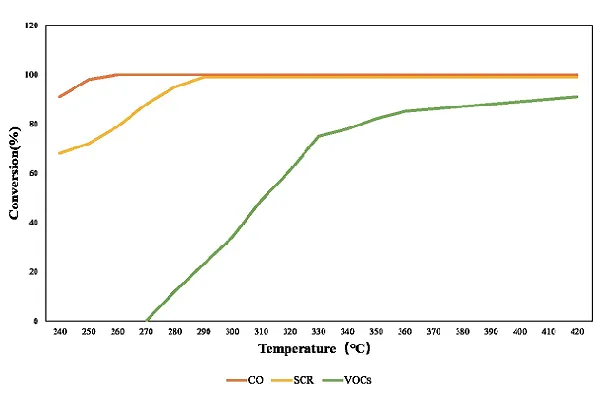
Low-temperature SCR addresses this directly. By operating effectively at 150°C–350°C, it eliminates or substantially reduces the reheating requirement — and the Ningbo Waste Incineration Plant project demonstrates that this approach can achieve outlet NOx below 75 mg/Nm³ under real incineration conditions.
How a Low-Temperature SCR System Works in Waste Incineration
The SCR reaction is straightforward in principle: inject ammonia or urea-derived reductant into the flue-gas stream upstream of the catalyst reactor, and within the catalyst's active temperature window, NOx reacts with the reductant to produce nitrogen and water vapor. The compliance challenge in waste incineration is not the chemistry — it is maintaining the flue-gas temperature within the catalyst's active window across the full operating range of the incinerator, including low-load periods, startup transitions, and waste composition variability.
In a typical waste-to-energy plant, the flue-gas treatment train after the boiler and heat recovery section includes particulate control, acid gas scrubbing, and activated carbon injection for dioxin and mercury control. By the time the flue gas reaches a tail-end SCR reactor, it has been cooled, humidified, and partially cleaned — but it is also at a temperature that may be 150°C–220°C rather than 300°C+. A high-temperature catalyst at this location requires reheating. A low-temperature catalyst does not.
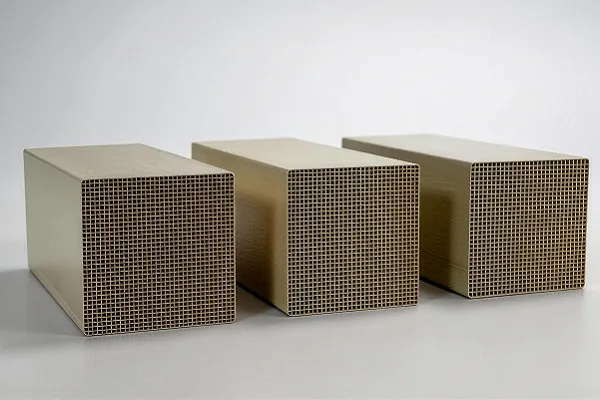
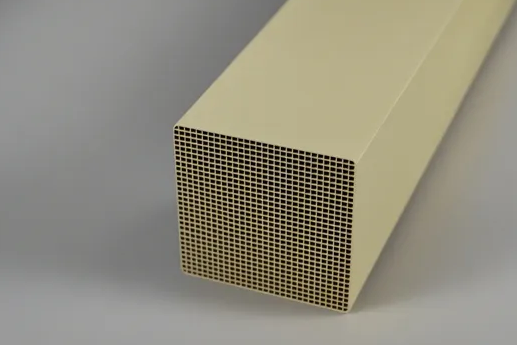
The low-temperature SCR catalyst is engineered to maintain NOx removal activity at these cooler conditions through a combination of active component formulation, pore structure design, and surface chemistry that resists the sulfur, alkali metal, and moisture poisoning mechanisms that are most aggressive at lower temperatures. TONEXUS highlights sulfur resistance, alkali metal resistance, and hydrophobicity as specific design features — properties that are directly relevant to the incineration flue-gas environment where these poisons are present at higher concentrations than in most industrial boiler applications.
SCR Flue Gas Treatment Configuration: Specifications That Decide Compliance
Before selecting a catalyst or sizing a reactor, the following parameters must be defined from actual plant data — not estimated from design assumptions:
| Parameter | What to Measure | Why It Matters |
|---|
| Flue-gas flow | Nm³/h at minimum, typical, and maximum load | Determines catalyst volume and space velocity |
| Temperature profile | °C at SCR reactor location across full load range | Determines whether low-temp catalyst is sufficient or reheating is required |
| NOx inlet concentration | mg/Nm³ at SCR inlet | Sets the required removal efficiency |
| NOx outlet target | mg/Nm³ per permit | Defines the compliance margin the system must maintain |
| Dust loading | mg/Nm³ at SCR inlet | Determines catalyst pitch and plugging risk |
| SO₂ / SO₃ | mg/Nm³ | Affects catalyst deactivation rate and ammonium sulfate deposition risk |
| Moisture content | % vol | Affects catalyst activity and hydrophobic design requirement |
| Alkali and heavy metals | Concentration indicators | Primary long-term deactivation risk in incineration duty |
| Allowable ΔP | mbar across reactor | Constrains catalyst volume and pitch selection; affects fan margin |
The system design elements that protect performance in complex WTE flue gas are: reactor placement at the tail-end position after particulate and acid gas control to reduce catalyst poison loading; ammonia injection grid (AIG) design for uniform mixing across the duct cross-section to prevent NH₃ slip and local over-dosing; insulation strategy to maintain temperature at the reactor inlet during low-load operation; and continuous monitoring of inlet/outlet NOx, temperature, and ΔP to detect deactivation trends before compliance is affected.
Case Reference: Ningbo Waste Incineration Plant — Outlet NOx Below 75 mg/Nm³
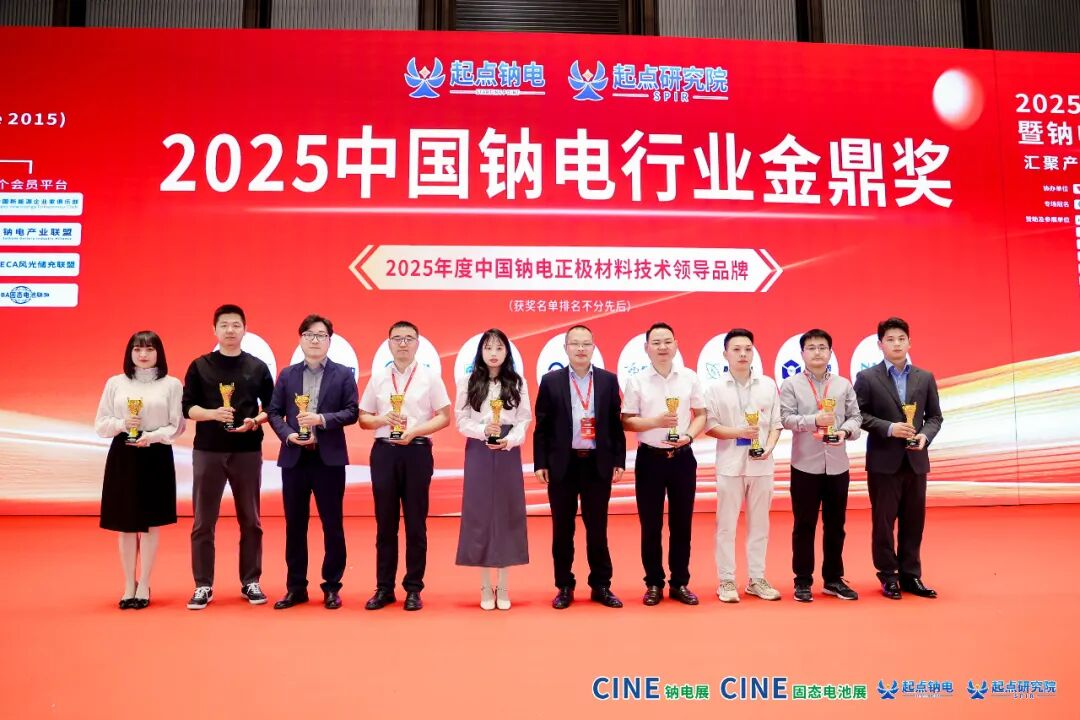
The Ningbo Waste Incineration Plant project, supplied by Shanghai SUS Environmental Co., Ltd., provides a directly relevant reference for 2026 compliance planning in the waste incineration sector. The project achieved outlet NOx at or below 75 mg/Nm³ — a stringent target that requires consistent, stable SCR performance under real incineration flue-gas conditions, not just at design-point test conditions.
The project's significance extends beyond the NOx result. It represents the first application of Chinese low-temperature SCR catalyst in the waste incineration industry, and the first replacement of imported catalyst with a Chinese low-temperature SCR catalyst in this sector. For procurement teams evaluating the technology, this establishes that low-temperature SCR catalyst manufactured to the required performance specification is available from a domestic Chinese supplier — with documented performance in the specific application context of waste incineration flue gas.
For internal approval and ROI documentation, the case structure is directly applicable: the catalyst was deployed in a tail-end position in a complex incineration flue-gas environment, achieved the required outlet NOx target, and did so without the reheating energy penalty that a high-temperature catalyst at the same location would have required. The energy saving from eliminating reheating — quantified in the industrial boiler context at approximately 42–51% of gas energy consumption under documented retrofit conditions — applies with similar logic to waste incineration tail-end installations where the alternative would be reheating from scrubber-outlet temperatures to 300°C+.
Installation and Selection: Avoiding Reheat and Rework in WTE SCR Projects
Step 1: Map the temperature profile. Measure flue-gas temperature at the candidate SCR reactor location across the full operating load range — minimum, typical, and maximum. Identify the hours per year below 200°C and below 150°C. This determines whether a low-temperature catalyst is sufficient without any reheating, or whether minimal supplemental heating is required during cold startup only.
Step 2: Confirm the NOx compliance target and margin. Define the permit limit and the operating margin required to avoid exceedances during load transitions. For facilities anticipating further tightening of emission standards, build in additional margin at the design stage.
Step 3: Characterize the flue gas for catalyst poison risk. Dust loading, SO₂, SO₃, alkali metals, and heavy metals at the SCR inlet determine the catalyst deactivation rate and therefore the service life and replacement interval. This characterization must be based on measured data from the actual plant, not generic incineration flue-gas assumptions.
Step 4: Size the catalyst reactor. Catalyst volume is determined by the required space velocity for the target NOx removal efficiency, the allowable pressure drop, and the maintenance access requirements for catalyst inspection and replacement. For incineration duty with variable dust loading, catalyst pitch selection to resist plugging is a critical sizing parameter.
Step 5: Design the AIG for uniform mixing. Poor ammonia distribution is the most common cause of NH₃ slip exceedances and uneven catalyst utilization in operating SCR systems. The AIG design must achieve the required mixing uniformity within the available duct length upstream of the catalyst.
Step 6: Integrate into the full SCR flue gas treatment train. The upstream particulate and acid gas control stages directly affect catalyst life. Confirm that the upstream cleanup performance is sufficient to keep catalyst poison loading within the design basis.
Step 7: Define acceptance tests. NOx inlet and outlet at rated and minimum load, NH₃ slip at rated load, ΔP baseline at clean catalyst condition, and temperature-window validation across the operating range.
Maintenance and TCO: Where Low-Temperature SCR Saves Money in Incineration Duty
The TCO advantage of low-temperature SCR in waste incineration is concentrated in three areas:
Eliminated reheating cost. A tail-end SCR installation that does not require flue-gas reheating saves the fuel or electricity that would otherwise be consumed every operating hour. For a plant running 8,000 hours per year with a reheating duty of several MW, this is a material annual saving that compounds over the catalyst's service life.
Reduced thermal cycling stress. Reheating equipment — gas burners, electric heaters, steam heat exchangers — introduces thermal cycling into the ductwork and expansion joints at every load change. Eliminating reheating removes this stress mechanism, reducing the maintenance frequency and failure risk of the ductwork components downstream of the reheating point.
More stable low-load compliance. A low-temperature catalyst that remains active at 160°C–180°C maintains NOx removal efficiency during the low-load periods when a high-temperature catalyst would be approaching its lower activity threshold. This reduces the frequency of compliance exceedances during load transitions and startup — which are the events most likely to trigger regulatory attention.
Maintenance practices that protect catalyst life in incineration duty: continuous ΔP trend monitoring to detect dust accumulation before plugging affects performance; scheduled visual inspections at planned outages for deposit formation and catalyst surface condition; and control system tuning to maintain the NH₃/NOx ratio within the design range across the full load range, balancing NOx removal efficiency against NH₃ slip.
Conclusion: Low-Temperature SCR Is the Practical Path to Ultra-Low Emissions in Waste Incineration
Ultra-low NOx compliance in 2026 waste incineration requires consistent performance under variable, chemically complex flue-gas conditions — not just compliance at the design-point test. A low-temperature SCR system engineered as part of a complete SCR flue gas treatment train can achieve outlet NOx below 75 mg/Nm³, as demonstrated at the Ningbo Waste Incineration Plant, while eliminating the reheating energy penalty that makes high-temperature SCR expensive to operate in tail-end incineration layouts.
The selection approach is: characterize the actual flue-gas temperature profile and poison loading first, confirm that the catalyst specification addresses the specific deactivation mechanisms present in incineration duty, and design the AIG and reactor as an integrated system rather than independent components.
Request a Recommended Configuration and Quotation
Share your incinerator and flue-gas conditions below, and our engineering team will recommend the correct low-temperature SCR catalyst configuration, reactor sizing, and system integration approach for your compliance requirements.
Working conditions: Incinerator type and waste mix, operating hours per year, load range, and flue-gas temperature profile at the proposed SCR reactor location.
Quantity: Number of treatment lines or reactor trains, catalyst layers per reactor, and whether spare catalyst modules are required.
Size and specification: Flue-gas flow (Nm³/h), temperature profile (minimum, typical, maximum), dust loading (mg/Nm³), SO₂ and SO₃ concentrations, moisture content, allowable pressure drop, and available reactor footprint.
Target metrics: Required NOx outlet concentration (mg/Nm³), NH₃ slip limit, reheating energy reduction target, and required catalyst service life.
Current problems: Low-load NOx exceedances, reheating fuel or electricity cost, catalyst plugging or short service life, fan margin limitations from ΔP buildup, or compliance instability during load transitions.
FAQ
1. What is an SCR system in waste incineration?
An SCR system in waste incineration is a NOx control system that injects a reductant — ammonia or urea-derived — into the flue-gas stream upstream of a catalyst reactor, where NOx is converted to nitrogen and water vapor within the catalyst's active temperature window. In waste incineration, the system must be designed for the specific challenges of incineration flue gas: variable temperature, high dust loading, acid gases, moisture, and catalyst poisons including alkali metals and heavy metals.
2. Low-temperature SCR vs. high-temperature SCR — what is the practical difference for waste incineration?
High-temperature SCR requires flue gas at approximately 300°C or above, which in tail-end incineration layouts — after heat recovery, particulate control, and acid gas scrubbing — typically requires flue-gas reheating. This adds fuel or electricity consumption at every operating hour and introduces thermal cycling stress on ductwork. Low-temperature SCR is designed to operate effectively at 150°C–250°C, eliminating or substantially reducing the reheating requirement. The Ningbo Waste Incineration Plant project demonstrates that outlet NOx below 75 mg/Nm³ is achievable with low-temperature SCR in real incineration conditions without reheating.
3. What is the ROI or payback of low-temperature SCR in waste-to-energy plants?
ROI is primarily driven by avoided reheating cost — the fuel or electricity that would otherwise be consumed to raise flue-gas temperature to 300°C+ at every operating hour. Secondary ROI comes from reduced thermal cycling maintenance on ductwork and expansion joints, more stable compliance during low-load periods, and potentially longer catalyst service life when the catalyst specification is matched to the actual poison loading in the flue gas. Payback period depends on the plant's temperature profile, load variability, and the cost of the reheating energy that is eliminated.
4. Do we need to modify the plant to install or upgrade to low-temperature SCR?
Yes, in most cases. Typical scope includes reactor and ductwork integration at the tail-end position, ammonia storage and injection system installation, AIG design and installation, insulation of the reactor and connecting ductwork, instrumentation for continuous NOx, temperature, and ΔP monitoring, and control system integration. Retrofit complexity depends on available space in the existing flue-gas treatment train and the condition of the upstream particulate and acid gas control stages. Low-temperature SCR retrofits typically require less civil modification than high-temperature alternatives because reheating equipment is not required.
5. What parameters should we provide for correct SCR system selection?
Provide the following: incinerator type and waste mix; flue-gas flow rate (Nm³/h); temperature profile at the proposed reactor location across the operating load range; NOx inlet concentration and required outlet target; dust loading (mg/Nm³); SO₂ and SO₃ concentrations; moisture content; alkali metal and heavy metal indicators if available; allowable pressure drop; available reactor footprint; operating hours per year; reductant type preference (ammonia or urea); and a description of current problems — such as low-load NOx exceedances, reheating cost, catalyst plugging, short catalyst service life, or fan margin limitations.
 English