
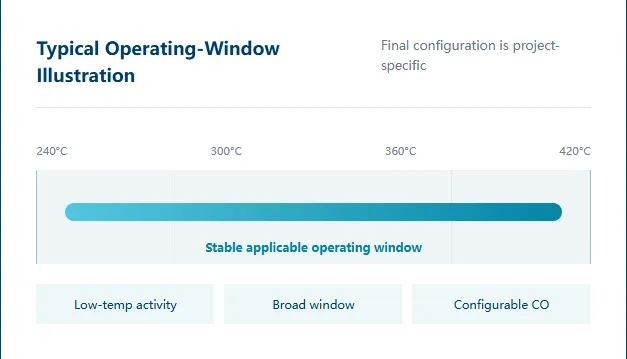

Designed for stable operation from 240°C, reducing additional reheating demand
Applicable across 240–420°C and adaptable to common temperature fluctuations
Suitable for streams containing SO₂, NOx, high moisture, aromatics and alkanes
Matched to equipment temperature limits and waste-heat recovery conditions
Partial SCR activity supports further NOx and ammonia-slip reduction
Regeneration can restore activity and help extend useful catalyst life
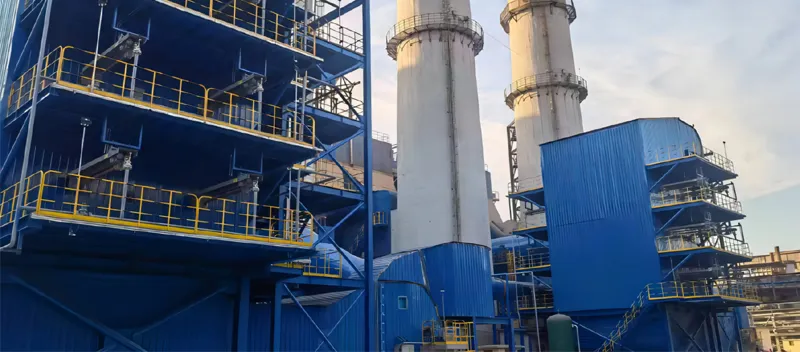
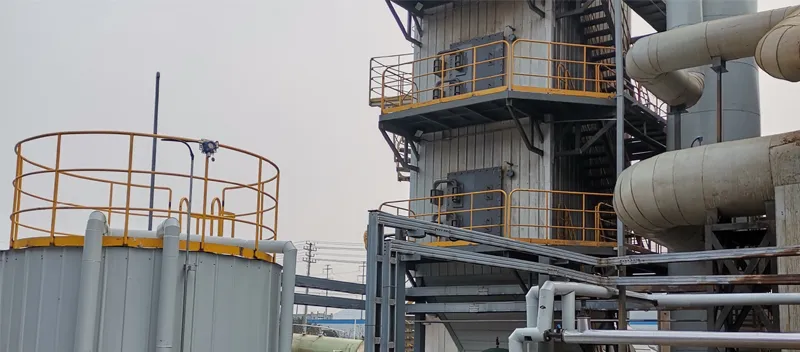
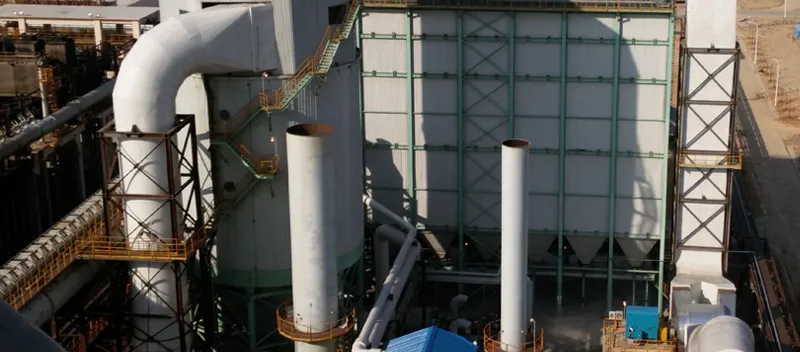
The catalyst is typically arranged downstream of the existing treatment system to oxidize aromatic and aliphatic NMHC. A temperature-control or heat-recovery-enhanced configuration is selected according to downstream equipment limits and project heat-recovery conditions.
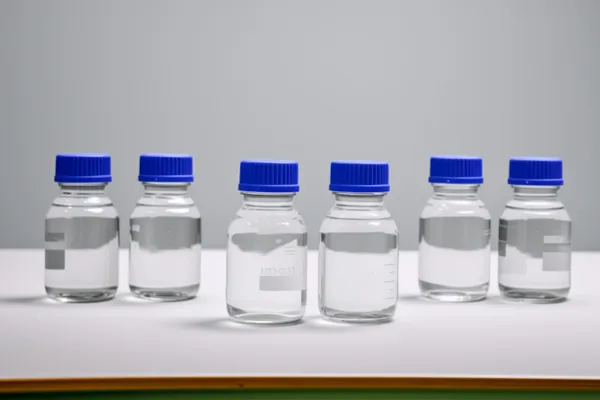
Solution :NMHC catalyst + existing flue-gas treatment system
Temperature :240–420°C
Emission target: Evaluated against 50/100 mg/m³ and project-specific requirements
Deep removal of aromatic and aliphatic NMHC from coke-oven flue gas
Adaptable to complex components, temperature swings and coexisting pollutants
Low-temperature adaptation: designs can start from 240°C, reducing additional reheating demand.
Flexible strategy: CO oxidation can be moderated for equipment safety or strengthened to support heat recovery.
Co-benefit control: partial SCR activity supports lower NOx and ammonia slip.
Long-term operation: in-situ regeneration can restore performance and reduce replacement frequency.
Review temperature, pollutants, sulfur, moisture and system configuration
Match the active formulation to NMHC composition and CO-control objectives
Determine installation position, catalyst volume and thermal strategy
Provide operating optimization, performance assessment and regeneration guidance