Dust control in industrial flue gas is not simply a matter of choosing the collector with the highest advertised efficiency. Particle size, gas temperature, moisture, chemistry, dust loading, pressure drop, available space, and maintenance practices all affect whether a system performs reliably after commissioning. A technology that works well on one process can struggle on another when the dust becomes sticky, abrasive, hygroscopic, or highly variable.
Why Industrial Flue Gas Needs Effective Dust Removal
Particulate emissions can come from combustion, raw-material handling, kilns, furnaces, grinding, and downstream chemical reactions. In integrated emission-control lines, removing dust can also protect downstream equipment and influence the stability of desulfurization or DeNOx stages.
The U.S. EPA explains that fabric filters, commonly called baghouses, remove particles by passing contaminated gas through fabric media. The accumulated dust cake itself plays an important role in capturing fine particles.[1]
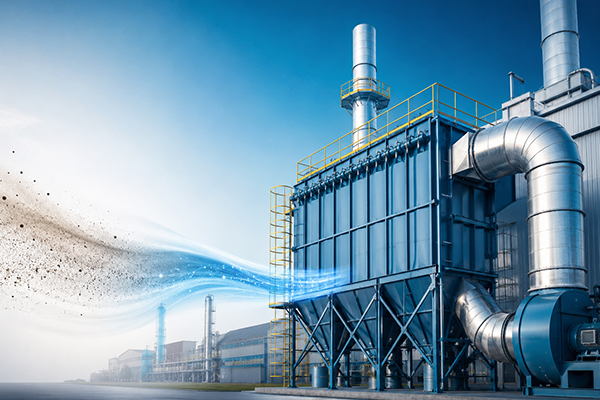
Baghouse, ESP, or Another Collection Method?
A baghouse is often considered where high collection efficiency is required across a broad particle-size range. EPA guidance states that fabric filters are generally capable of collection efficiencies above 99%, although actual performance depends on design and operating conditions.[1] Electrostatic precipitators use electrical forces to charge and collect particles and may offer advantages such as relatively low pressure drop in suitable applications.
The choice of dust removal equipment should therefore begin with process data rather than a preferred technology. Engineers should check normal and peak gas temperature, particle characteristics, inlet concentration, moisture, corrosiveness, target outlet concentration, fan capacity, available footprint, and maintenance access.
How Operating Conditions Change the Design
Temperature determines what filter media or equipment materials can survive. Moisture and acid dew point matter because condensation can cause corrosion or make dust difficult to release. Abrasive particles can accelerate wear, while very fine or cohesive dust may increase pressure drop.
For an existing plant, available fan margin is especially important. Adding a collector or changing filter media changes system resistance, so collection efficiency cannot be evaluated separately from airflow and energy consumption.
Dust Removal as Part of Integrated Flue Gas Treatment
Dust control should not be designed in isolation when the same gas stream also requires SO₂ or NOx treatment. Equipment sequence influences temperature, particulate loading, catalyst exposure, reagent contact, and maintenance strategy.
TONEXUS positions DeDust alongside DeNOx and DeSOx within its flue-gas treatment portfolio. Its main Flue Gas Treatment page reports more than 800 project cases across over 20 industries, including pulp and paper, steel, power generation, and non-ferrous smelting.
Where several pollutants must be controlled in one process line, integrating particulate control into the wider flue gas treatment system can reduce interface problems between separate treatment stages and make operating conditions easier to evaluate as a whole.
What Buyers Should Specify Before Requesting a Proposal
A useful technical inquiry should include gas volume, normal and peak temperature, inlet dust concentration, particle size distribution, dust chemistry, moisture, required outlet concentration, operating hours, available footprint, utility conditions, and existing fan data.
Procurement teams should also ask how pressure drop will be monitored, how collected dust will be discharged, what access is required for maintenance, and how performance will be verified after commissioning.
FAQs
What is the best way to remove dust from industrial flue gas?
There is no universal best technology. The right option depends on gas conditions, particle characteristics, emission limits, pressure-drop tolerance, footprint, and maintenance requirements.
Are baghouses effective for fine particulate matter?
Yes. EPA technical guidance indicates that fabric filters can achieve very high particulate collection efficiencies, including for fine particles.[1]
What causes high pressure drop in a baghouse?
Typical causes include excessive dust cake, blinded filter media, inadequate cleaning, moisture problems, or airflow above the intended operating range.
What information is needed to select an industrial dust collector?
Key inputs include gas flow, temperature, dust loading, particle properties, moisture, target outlet concentration, system pressure, available space, and operating schedule.
References
[1] U.S. Environmental Protection Agency. (2026). Monitoring by Control Technique — Fabric Filters. Air Emissions Monitoring Knowledge Base.
[2] U.S. Environmental Protection Agency. (2003). Air Pollution Control Technology Fact Sheet: Fabric Filter — Mechanical Shaker Cleaned Type. EPA-452/F-03-024.
 English
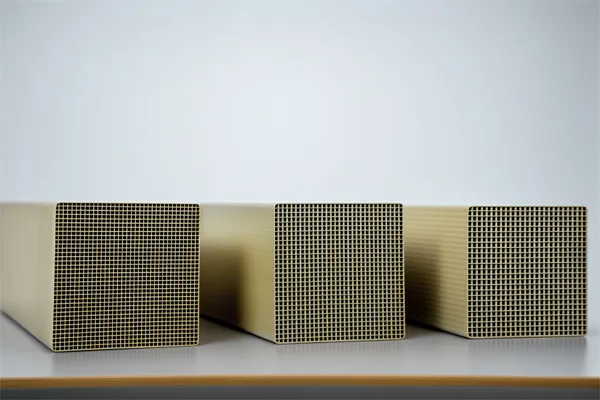

.webp "Benchmark Project | Low-temperature SCR Denitrification for Asia Symbol RB2 Recovery Boiler")