Retrofitting an existing industrial plant for tighter NOx limits is rarely a simple equipment replacement. The real engineering challenge is fitting a new control stage into an operating process without creating excessive pressure loss, heat demand, downtime, or maintenance burden. A practical retrofit therefore starts with the actual flue-gas envelope: flow rate, temperature, inlet NOx, sulfur and dust levels, load variation, available space, and the required outlet limit.
When Does an Industrial Plant Need a DeNOx Retrofit?
A retrofit becomes relevant when emission limits tighten, existing SNCR performance is no longer sufficient, ammonia slip becomes difficult to control, or production changes alter the original gas conditions. It may also be driven by operating cost. For example, an SCR arrangement that depends heavily on reheating can become expensive when fuel and energy costs rise.
The U.S. EPA describes SCR as an established add-on NOx control technology and identifies retrofit difficulty as one of the factors influencing project economics.[1] This is why the appropriate denox technology should be selected around actual plant conditions rather than forcing an existing process to accommodate a standard equipment package.
What Determines DeNOx Project Cost?
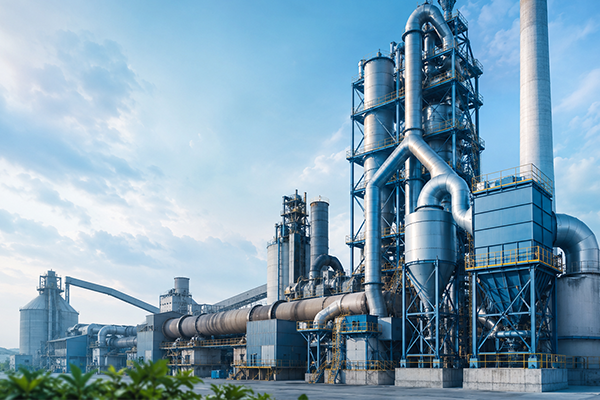
There is no reliable “cost per unit” that applies to every retrofit. Reactor size, catalyst volume, duct modifications, structural steel, reagent storage and dosing, control upgrades, fan margin, construction access, and shutdown time can all change the budget.
For buyers, the more useful comparison is total cost of ownership: capital expenditure, expected catalyst life, reagent consumption, pressure-drop energy, heating demand, routine maintenance, and future catalyst replacement. EPA’s SCR cost methodology similarly considers both capital and annual operating costs when evaluating control economics.[2]
Choosing the System Around Real Flue-Gas Conditions
The required NOx reduction should be matched to temperature and contaminant conditions. TONEXUS reports a 2×600 t/d lime-kiln project where NOx concentration was reduced from 500 mg/Nm³ to below 50 mg/Nm³, with a catalyst designed for stable operation at 195–220°C under sulfur-containing conditions.
Where DeNOx is only one part of a wider plant upgrade, the retrofit should also be coordinated with the existing flue gas treatment system. Dust loading, desulfurization chemistry, heat recovery, and equipment sequence can influence catalyst exposure, gas temperature, pressure drop, and long-term operating stability.
From Equipment Supply to Turnkey Delivery
A retrofit is easier to control when responsibilities are clear from the beginning. Typical work packages include site survey, process calculation, layout design, equipment supply, installation planning, control integration, commissioning, and performance verification. Where shutdown windows are short, constructability and tie-in planning can be just as important as catalyst selection.
Low-temperature applications may also justify evaluating scr denox when reducing or avoiding flue-gas reheating can improve the overall energy balance. TONEXUS lists its low-temperature SCR catalyst as applicable across a 150–350°C operating range.
FAQs
Can SCR be retrofitted to an existing industrial plant?
Yes. SCR can be added to existing facilities, but feasibility depends on available space, temperature, pressure-drop allowance, reagent handling, structural conditions, and the required NOx reduction.
What makes a DeNOx retrofit expensive?
Major cost drivers include reactor and catalyst size, ductwork changes, structural modifications, fan upgrades, reagent systems, installation complexity, and plant outage requirements.
Is low-temperature SCR useful for retrofit projects?
It can be valuable when the available flue gas is below the preferred temperature of conventional SCR and reheating would create substantial energy consumption or operating cost.
What data should be prepared before requesting a DeNOx proposal?
Important inputs include gas flow, temperature range, inlet and target NOx, SO₂, dust, moisture, oxygen, operating hours, load profile, available space, and details of existing emission-control equipment.
References
[1] U.S. Environmental Protection Agency. (2003). Air Pollution Control Technology Fact Sheet: Selective Catalytic Reduction (SCR). EPA-452/F-03-032.
[2] U.S. Environmental Protection Agency. (2019). Air Pollution Control Cost Manual, Chapter 2: Selective Catalytic Reduction. 7th ed.
 English