In 2026, incineration and industrial thermal process operators are discovering that SNCR compliance is a moving target. Tighter multi-pollutant requirements mean that NOx control alone is no longer sufficient — ammonia slip, dioxin emissions, and downstream fouling are all under regulatory and community scrutiny simultaneously. SNCR remains attractive for its lower capital cost and retrofit simplicity, but its operational limitations are becoming harder to manage: the narrow effective temperature window in the furnace creates dosing sensitivity, load swings push operators toward higher reagent injection to maintain NOx compliance, and the resulting ammonia slip drives plume complaints, ammonium salt deposits on air preheaters, and corrosion in downstream equipment. Meanwhile, the SCR temperature challenge at tail-end locations — where flue gas has been cooled by heat recovery and scrubbing — makes conventional high-temperature SCR expensive to retrofit without reheating.
The practical answer for 2026 is a tail-end low-temperature SCR catalyst layer added downstream of the existing SNCR system. It acts as a "policeman" for the flue-gas treatment train: consuming the excess ammonia that SNCR leaves behind, providing additional NOx conversion margin, and supporting catalytic reactions that address dioxin control — all within a temperature window that matches the actual tail-end conditions without requiring reheating.
Why Standalone SNCR Struggles: The Root Causes
SNCR injects ammonia or urea into the high-temperature furnace zone — typically 850°C–1,100°C — where the thermal NOx reduction reaction occurs without a catalyst. The fundamental limitation is the narrow effective temperature window. Too hot, and the reagent decomposes before reacting with NOx. Too cool, and the reaction rate is insufficient. In practice, the furnace temperature at the injection point varies with load, waste composition, and combustion conditions — and operators compensate by increasing reagent dosing to maintain NOx compliance during unfavorable conditions.
The consequence is ammonia slip: unreacted ammonia passing through the furnace and into the downstream flue-gas treatment train. In 2026 operations, ammonia slip creates four distinct cost and compliance problems:
Visible plume and odor complaints from ammonia in the stack discharge, triggering community and regulatory responses
Ammonium salt deposits on air preheaters and ductwork, where NH₃ reacts with SO₃ to form ammonium bisulfate — a sticky, corrosive deposit that increases pressure drop, forces cleaning outages, and accelerates metal corrosion
Sensor drift and compliance reporting complications from ammonia contamination of monitoring equipment
Dioxin compliance gap: SNCR chemistry has no mechanism for dioxin oxidation or decomposition — it addresses NOx only, leaving plants exposed to separate dioxin compliance requirements that are tightening in parallel with NOx limits
How Tail-End Low-Temperature SCR Solves the Problem
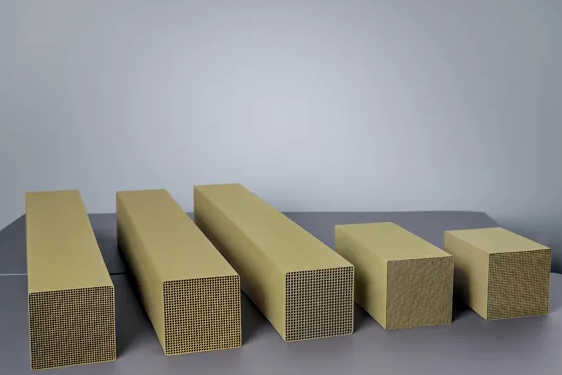
A tail-end SCR catalyst layer positioned downstream of the SNCR system and the primary flue-gas cleanup stages addresses all four SNCR limitations through a single installation:
Ammonia slip consumption: the catalyst provides a surface for the SCR reaction to continue at lower temperatures. Excess NH₃ from the SNCR system reacts with residual NOx across the catalyst, consuming the slip ammonia that would otherwise reach the stack or deposit on downstream equipment. The result is a measurable reduction in NH₃ slip — directly addressing the plume, odor, and fouling problems.
Additional NOx conversion margin: the catalyst provides a second NOx reduction stage that supplements SNCR performance. This allows the SNCR system to operate at a lower reagent dosing rate — reducing ammonia slip at the source — while the tail-end catalyst provides the additional conversion needed to meet the outlet NOx target. The combined system is more stable across load swings than SNCR alone.
Dioxin catalytic oxidation pathway: at tail-end positions in waste incineration and biomass combustion flue-gas trains, a catalyst stage can support oxidation reactions that decompose certain chlorinated organic micro-pollutants including dioxins and furans. The effectiveness depends on catalyst formulation, temperature, and flue-gas composition — site-specific verification is required — but the tail-end SCR position is the same location where dioxin catalytic control is most practically implemented, making the combined NOx/dioxin function achievable from a single reactor installation.
Low-temperature operation without reheating: tail-end flue-gas temperatures after heat recovery, particulate control, and acid gas scrubbing are typically 150°C–220°C. TONEXUS low-temperature SCR catalysts are designed to maintain activity in this range — with a documented operating window of 150°C–350°C for wide-range products — eliminating the reheating requirement that makes high-temperature SCR expensive at tail-end locations. The energy saving from avoiding reheating in documented retrofit conditions has been quantified at approximately 42–51% of gas energy consumption, a figure directly applicable to tail-end SNCR upgrade projects where the alternative would be reheating from scrubber-outlet temperatures.
Key Specifications for the Tail-End Catalyst Layer
The following parameters must be defined from actual plant measurements before catalyst selection:
| Parameter | What to Measure | Why It Matters |
|---|
| Temperature profile at tail-end location | °C at minimum, typical, and maximum load | Determines whether low-temperature catalyst is sufficient without reheating |
| Flue-gas flow | Nm³/h at operating conditions | Sizes catalyst volume and space velocity |
| Current NH₃ slip | mg/Nm³ at SNCR outlet | Sets the NH₃ consumption requirement for the catalyst |
| NOx at catalyst inlet | mg/Nm³ | Determines additional conversion required from the catalyst stage |
| NOx outlet target | mg/Nm³ per permit | Defines the combined SNCR + SCR system performance requirement |
| Dust loading | mg/Nm³ at catalyst inlet | Determines catalyst pitch and plugging risk |
| SO₂ / SO₃ | mg/Nm³ | Affects ammonium salt formation risk and catalyst deactivation |
| Alkali and heavy metals | Concentration indicators | Primary long-term deactivation risk in incineration and biomass duty |
| Allowable ΔP | mbar across reactor | Constrains catalyst volume and pitch; affects fan margin |
From suppliers, request: activity data within your specific SCR temperature window (not just at a reference condition); NH₃ slip target achievable after the catalyst at your inlet slip level; ΔP baseline and expected ΔP growth rate at your dust loading; and resistance data for the specific poisons present in your flue gas — alkali metals, heavy metals, and sulfur compounds.
Where SNCR Plus Tail-End SCR Delivers the Best ROI
Waste incineration with variable loads: municipal solid waste incinerators experience frequent load changes from waste composition variability and throughput fluctuations. SNCR over-dosing events during load transitions are the primary source of ammonia slip in these plants. The tail-end catalyst provides a consistent NH₃ consumption buffer that absorbs the slip from dosing excursions without requiring the SNCR control system to achieve perfect reagent tracking under variable conditions.
Biomass and industrial boilers with air preheater fouling history: plants that have experienced ammonium bisulfate deposits on air preheaters — evidenced by progressive ΔP rise and forced cleaning outages — are the clearest ROI case for tail-end SCR. Reducing NH₃ slip at the source of the deposit formation directly reduces the fouling rate and the associated cleaning frequency and downtime cost.
Facilities under multi-pollutant scrutiny: for plants where regulators or ESG auditors are looking beyond NOx to dioxin emissions, the tail-end SCR position provides a practical location for catalytic dioxin control that does not require a separate installation. The combined NOx/NH₃ slip/dioxin function from a single reactor is a more cost-effective compliance roadmap than addressing each pollutant with a separate system.
Installation Workflow and Maintenance: Getting the Retrofit Right
8-step project plan:
Baseline test campaign: measure NOx, NH₃ slip, temperature profile, dust loading, SO₂/SO₃, and moisture at the proposed catalyst location across the operating load range
Confirm compliance targets and margin for NOx, NH₃ slip, and dioxin — including any anticipated future tightening
Select tail-end location and verify the available SCR temperature window; confirm whether any supplemental insulation is required to maintain temperature at minimum load
Choose catalyst geometry and size the reactor for the required space velocity, ΔP limit, and maintenance access
Engineer mixing and flow distribution upstream of the catalyst — uniform NH₃ and flow distribution is the single most important factor in achieving the target NH₃ slip reduction
Integrate instrumentation: continuous NOx inlet and outlet, temperature at reactor inlet, ΔP across catalyst, and NH₃ slip monitoring where required by permit
Commission with acceptance tests: NOx and NH₃ slip at rated and minimum load, ΔP baseline at clean catalyst, temperature-window validation
Define maintenance plan: ΔP trend monitoring intervals, visual inspection schedule at planned outages, catalyst activity assessment criteria, and replacement trigger
Common retrofit mistakes: installing the catalyst without correcting poor flow distribution upstream — which causes uneven catalyst utilization and early plugging in high-velocity zones; ignoring dust and poison characterization — which leads to faster-than-expected deactivation; and underestimating ΔP growth rate — which exhausts fan margin before the planned catalyst replacement interval.
TCO Summary
| Cost Category | Impact of Tail-End Low-Temperature SCR |
|---|
| Air preheater cleaning outages | Reduced frequency from lower NH₃ slip and ammonium salt formation rate |
| Reagent consumption | Reduced — SNCR can operate at lower dosing rate with catalyst providing compliance margin |
| Reheating fuel/electricity | Eliminated or substantially reduced — low-temperature catalyst matches tail-end conditions |
| Compliance excursions | Reduced — catalyst provides stable NOx and NH₃ slip control across load swings |
| Dioxin compliance cost | Potentially addressed from the same reactor installation |
Conclusion: The Tail-End Catalyst Layer Is the Practical 2026 SNCR Upgrade
For plants relying on SNCR in 2026, the real operational constraint is not capital cost — it is ammonia slip, downstream fouling, and multi-pollutant compliance pressure under variable loads. A tail-end low-temperature SCR catalyst layer provides a practical, energy-efficient upgrade path: consuming excess NH₃ from SNCR overdosing, providing additional NOx conversion margin, and supporting dioxin catalytic control, all within the SCR temperature window that actually exists at tail-end positions without requiring reheating. The best outcomes come from temperature-profile-first design, correct mixing engineering, and a catalyst formulation matched to the specific dust, sulfur, and poisoning conditions of the application.
Request a Recommended Tail-End Catalyst Configuration and Quotation
Share your process conditions and current SNCR performance data below, and our engineering team will recommend the correct low-temperature SCR catalyst configuration, reactor sizing, and mixing design for your tail-end upgrade.
Visit the low-temperature SCR catalyst product page to review specifications, documented performance data, and available configurations for SNCR tail-end upgrade applications.
Working conditions: Process type (waste incineration, biomass, industrial boiler), fuel or waste mix, operating hours per year, load range, and current SNCR reagent type and dosing rate.
Quantity: Number of treatment lines or reactor trains, catalyst layers per reactor, and whether spare catalyst modules are required.
Size and specification: Flue-gas flow (Nm³/h), duct dimensions and available space at the tail-end location, temperature profile (minimum, typical, maximum), dust loading, SO₂/SO₃ concentrations, moisture content, and allowable pressure drop.
Target metrics: Required NOx outlet (mg/Nm³), maximum allowable NH₃ slip after catalyst, dioxin compliance requirement if applicable, reheating energy reduction target, and required catalyst service life.
Current problems: High NH₃ slip, air preheater fouling and ΔP rise, low-load NOx excursions, short maintenance intervals from catalyst plugging, reheating cost, or dioxin compliance pressure.
FAQ
1. What is SNCR?
Selective Non-Catalytic Reduction is a NOx control method that injects ammonia or urea into the high-temperature furnace zone — typically 850°C–1,100°C — where the thermal reduction reaction converts NOx to nitrogen and water without requiring a catalyst. SNCR is lower in capital cost and simpler to retrofit than SCR, but its performance is sensitive to temperature and mixing conditions, and it typically produces higher ammonia slip than SCR-based systems, particularly during load swings.
2. Tail-end SCR vs. SNCR-only — what is the practical difference?
SNCR-only reduces NOx in the furnace but leaves residual ammonia slip that causes downstream fouling, plume complaints, and corrosion, and provides no mechanism for dioxin control. Adding a tail-end low-temperature SCR catalyst layer downstream of the SNCR system provides a second NOx conversion stage, consumes the excess NH₃ from SNCR overdosing, and can support dioxin catalytic oxidation — all within the lower SCR temperature window typical of tail-end positions, without requiring flue-gas reheating.
3. What is the ROI or payback of adding tail-end low-temperature SCR after SNCR?
ROI comes from four sources: reduced air preheater cleaning outages and associated downtime from lower ammonium salt formation; lower reagent consumption as SNCR can operate at reduced dosing rates with the catalyst providing compliance margin; avoided reheating fuel or electricity if the low-temperature catalyst matches tail-end conditions; and fewer compliance excursions during load transitions. For plants with a history of air preheater fouling or frequent low-load NOx exceedances, payback within one to two years is achievable.
4. Do we need to modify the plant to add a tail-end catalyst layer?
Yes. Typical modifications include adding a catalyst reactor section in the tail-end ductwork, insulation of the reactor and connecting ductwork to maintain temperature at minimum load, flow distribution devices upstream of the catalyst, instrumentation for continuous NOx, temperature, ΔP, and NH₃ slip monitoring, and control system updates to integrate the tail-end catalyst into the overall reagent dosing strategy. The scope is typically less than a standalone SCR installation because the SNCR system already provides the primary reagent injection infrastructure.
5. What parameters should we provide to select the right catalyst and design?
Provide the following: flue-gas flow (Nm³/h); temperature profile at the tail-end location across the operating load range; current NOx and NH₃ slip measurements at the SNCR outlet; dust loading; SO₂ and SO₃ concentrations; moisture content; alkali metal and heavy metal indicators; available duct dimensions and space at the tail-end location; allowable pressure drop; target NOx outlet and maximum NH₃ slip after catalyst; operating hours per year; and current pain points — such as air preheater fouling, high ΔP events, low-load NOx excursions, short catalyst service life, or dioxin compliance pressure.
 English