If you have ever received a capital quote for SCR and immediately shelved the technology in favour of SNCR because the upfront number was lower, you may have made a decision that will cost significantly more over the asset lifetime. The most common and expensive mistake in NOx control technology selection is comparing initial installation cost while ignoring the variables that actually drive long-term spend: reagent efficiency, catalyst management, ammonia slip penalties, compliance risk exposure, and the critical but often misunderstood SCR temperature window constraint.
Enterprise boiler operators choose NOx control technology based on compliance obligations and total dollars over time — not on chemistry. Getting that comparison right requires a structured total cost of ownership (TCO) framework, not a single-line capital quote. This guide gives you that framework.
In this guide you will learn:
What SNCR and SCR are in plant operational terms
How each technology removes NOx and why the SCR temperature window is a central design and cost variable
All the components you actually buy and operate in each system
A structured TCO comparison across CAPEX, OPEX, and risk
Where each technology tends to win by industry and application type
Real operational benefits, honest challenges, and a buyer's checklist
Maintenance practices that protect your TCO investment over time
What SNCR and SCR Are — In Plant Terms
SNCR (Selective Non-Catalytic Reduction)
SNCR injects a nitrogen-based reagent — typically urea or ammonia — directly into the hot flue gas zone inside or immediately downstream of the combustion chamber. At the correct temperature window (approximately 850–1100°C for urea), the reagent reacts with NOx and reduces it to nitrogen and water without requiring a catalyst. No reactor vessel, no catalyst, no major ductwork modifications.
The operating constraint is the temperature window. Too cool and the reaction rate drops; too hot and the reagent itself thermally decomposes and can actually produce additional NOx. The reaction zone exists and moves with load — and that movement creates the core operational challenge of SNCR systems.
SCR (Selective Catalytic Reduction)
SCR injects reagent upstream of a catalyst reactor. The catalyst lowers the activation energy required for the NOx reduction reaction, enabling it to occur efficiently at temperatures well below the SNCR window — typically 300–450°C for conventional catalysts, and lower still for low-temperature SCR formulations. The SCR temperature window is defined by the catalyst chemistry and placement, not by the combustion process.
This separation of reaction from combustion gives SCR a fundamental performance advantage: the conversion rate is controlled by the catalyst and reagent supply, not by the coincidence of the flue gas spending time in the right temperature zone. The trade-off is the capital investment in the reactor, catalyst modules, and ductwork integration.
In the field: The technology choice is often described as a CAPEX versus OPEX trade-off. That framing is correct in direction but incomplete in detail. The SCR temperature placement decision and the SNCR reagent efficiency gap are the variables that determine whether the OPEX difference closes the CAPEX gap — and over what timeframe.
How Each Technology Removes NOx
SNCR Principle
The reagent reacts with NOx through a set of homogeneous gas-phase reactions that are strongly temperature-dependent. Within the optimal window:
Urea or ammonia decomposes to reactive intermediates
These intermediates selectively reduce NOx (NO, NO₂) to N₂ and H₂O
The reaction competes with direct oxidation of the reagent to NOx — the selectivity drops outside the temperature window
Performance characteristics: NOx reduction of 30–60% is typical in well-designed installations. Achieving the upper end requires precise injection into the optimal temperature zone, which moves with boiler load. Higher reduction targets require more reagent, which increases both cost and ammonia slip risk.
SCR Principle
The catalyst provides an active surface where the NOx reduction reaction occurs at much lower temperatures than the uncatalysed gas-phase reaction. Within the catalyst's SCR temperature operating window:
Reagent adsorbs on the catalyst surface
NOx from the flue gas reacts with adsorbed reagent to form N₂ and H₂O
The catalyst is not consumed — it provides the reactive surface continuously
Performance characteristics: NOx reduction of 70–95%+ is achievable in well-designed SCR systems. The conversion rate is relatively stable across load variations compared to SNCR, as long as flue gas temperature remains within the catalyst's activity window.
The SCR Temperature Factor
The SCR temperature window is the operating range within which the catalyst delivers its rated conversion efficiency. Below the minimum operating temperature, conversion drops and unreacted ammonia slip increases. Above the maximum, catalyst deactivation can accelerate.
| Temperature Condition | Effect on SCR Performance | TCO Consequence |
|---|
| Within rated window | Full conversion rate; normal catalyst life | Baseline TCO |
| Intermittently below minimum | Reduced conversion; ammonia slip increase | Compliance risk; potential permit exceedance |
| Sustained below minimum | Progressive catalyst deactivation | Accelerated replacement cycle; higher OPEX |
| Above maximum (prolonged) | Catalyst sintering and permanent activity loss | Early catalyst replacement; unplanned capital |
For operations with variable load profiles or fuels that affect flue gas temperature — waste-to-energy, biomass co-firing, partial load operation — the SCR temperature profile analysis is the most important engineering input in system design.
What You Actually Buy and Operate
SNCR System Components
| Component | Function | Operating Cost Driver |
|---|
| Reagent storage tanks | Urea solution or ammonia storage | Reagent consumption rate × price |
| Dosing skids and pumps | Controlled reagent delivery | Maintenance; pump seal life |
| Injection lances and nozzles | Atomized reagent delivery into hot zone | Nozzle fouling/wear; replacement frequency |
| Control system | Load-following dosing adjustment | Tuning labour; sensor calibration |
| Ammonia slip monitoring | Downstream NH₃ measurement | Analyser maintenance; compliance documentation |
SCR System Components
| Component | Function | Operating Cost Driver |
|---|
| Catalyst reactor vessel | Houses catalyst modules; defines SCR temperature placement | Capital; periodic inspection |
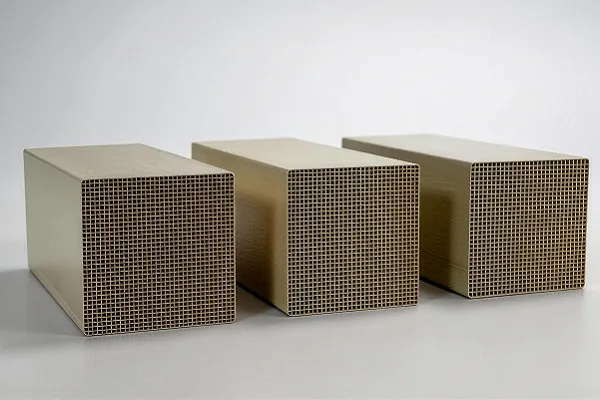
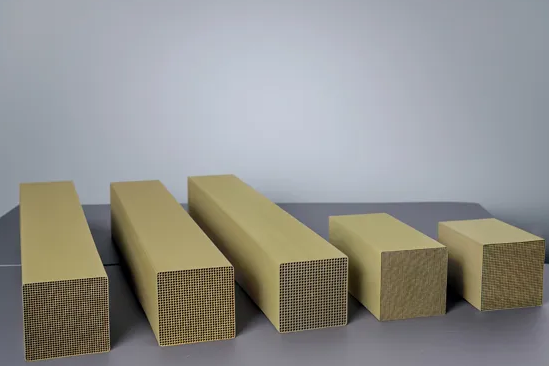
| Catalyst modules | Active NOx conversion surface | Replacement cycle (typically 3–7 years) |
| Ammonia injection grid (AIG) | Uniform reagent distribution upstream of catalyst | Distribution tuning; maintenance |
| Reagent storage and dosing | Urea or ammonia supply | Reagent consumption (typically lower per ton NOx than SNCR) |
| Ductwork and mixing equipment | Ensures uniform NH₃/NOx ratio at catalyst face | Design and installation cost |
| Monitoring instruments | NOx, NH₃ slip, differential pressure | Ongoing calibration and maintenance |
TCO Comparison: Where the Numbers Actually Go
Diagram: Side-by-side comparison of SNCR injection zone in a boiler versus SCR reactor with SCR temperature window callout — with TCO stack chart showing CAPEX, reagent cost, catalyst cost, energy/pressure drop, maintenance, and compliance risk by technology.
CAPEX Comparison
| Cost Element | SNCR | SCR |
|---|
| Hardware cost | Lower — injection system only | Higher — reactor, catalyst, ductwork |
| Installation complexity | Lower — minimal ductwork changes | Higher — reactor integration, AIG installation |
| Outage requirement | Shorter | Longer for first installation |
| Typical relative CAPEX | Baseline | 2–5× SNCR depending on configuration |
OPEX Comparison
| Cost Element | SNCR | SCR |
|---|
| Reagent consumption per ton NOx removed | Higher — lower conversion efficiency | Lower — higher conversion efficiency |
| Catalyst cost | None | Periodic replacement (major OPEX item) |
| Fan energy (pressure drop) | Minimal | SCR reactor adds ΔP; fan power impact |
| Ammonia slip penalties | Higher risk at aggressive reduction targets | Lower with proper AIG design and monitoring |
| Maintenance labour | Nozzle cleaning, dosing calibration | AIG inspection, catalyst management, sootblowing |
| Compliance risk cost | Higher at tight limits | Lower — more stable conversion |
When SCR TCO Becomes Lower Than SNCR TCO
The crossover point depends on:
NOx reduction target: Above approximately 50–60% reduction, SNCR reagent consumption and slip management costs increase steeply. SCR becomes relatively more cost-effective as the reduction target rises.
Operating hours: Higher annual utilisation amortises SCR capital faster; the OPEX advantage compounds more quickly.
Reagent price: At high urea or ammonia prices, SNCR's reagent disadvantage widens.
Compliance risk value: If a permit exceedance carries significant penalty cost, SCR's stable performance has an implicit insurance value that does not appear in hardware cost comparisons.
SCR temperature placement: A well-placed SCR — or a low-temperature SCR catalyst for cooler flue gas positions — captures the full performance advantage. A poorly placed SCR that spends significant time outside the catalyst window erodes the OPEX benefit.
Bottom line: SCR is almost always more expensive upfront. Over a 10–20 year asset life, SCR is frequently less expensive in total when NOx reduction targets exceed 60%, when operating hours are high, and when compliance risk has real financial consequence. The comparison must be done on your plant data, not on industry averages.
Where Each Technology Tends to Win
| Sector / Condition | SNCR Often Preferred | SCR Often Preferred |
|---|
| NOx reduction target | Moderate (30–55%) | Tight (60–90%+) |
| Plant utilisation | Lower; variable operation | High; continuous operation |
| Available footprint | Constrained; limited retrofit space | Adequate for reactor integration |
| Compliance timeline | Fast retrofit required | Planned outage available |
| Fuel type | Variable; ash/fouling risk high | Stable; ash/fouling manageable |
| Regulatory trend | Current limits achievable with SNCR | Limits tightening; SCR as future-proof choice |
| Power/steam boilers | Where limits allow | Where tight NOx limits apply |
| Cement and lime kilns | Moderate reduction targets | Where higher reductions are required |
| Waste-to-energy | Variable load; contamination concern | Where emission limits require consistent control |
| Refining and petrochem | Process heaters with moderate targets | Boilers with tight compliance requirements |
What Enterprises Gain When TCO Is Optimised
| Benefit | What It Means in Practice |
|---|
| Lower cost per ton NOx removed | Direct OPEX reduction over the asset life — most visible at high utilisation |
| Reduced compliance risk | Fewer permit exceedances; no penalty costs; predictable regulatory position |
| More stable operations | Less tuning intervention; fewer performance swings at variable load |
| Better ESG outcomes | Consistent, documented emission reductions support public and regulatory reporting |
| Capital efficiency | Right-sizing the technology to the actual reduction requirement avoids over- or under-investment |
Challenges That Make "SCR Is Always Better" Untrue
| Challenge | Impact on SCR TCO | Mitigation |
|---|
| High dust/ash loading | Catalyst fouling; increased maintenance; potential plugging | Upstream particulate control; catalyst geometry selection; sootblowing design |
| High SOx in flue gas | Ammonium sulphate/bisulphate formation at low temperatures; potential catalyst poisoning | SCR temperature management; catalyst formulation selection; operating window control |
| Constrained retrofit space | Reactor installation cost increases; may require significant civil work | Low-temperature tail-end SCR options reduce reactor placement constraints |
| Variable load SCR temperature profile | Time outside catalyst window reduces conversion and increases slip | Temperature modelling during design; catalyst selection matched to actual profile |
| Limited outage windows | Higher installation cost; scheduling risk | Phased installation planning; modular reactor designs |
| Challenge | Impact on SNCR TCO | Mitigation |
|---|
| Very tight NOx limits | Reagent use increases steeply; slip becomes hard to control | SNCR + SCR hybrid may be more cost-effective than SNCR alone |
| Temperature window movement | Performance varies with load; consistent compliance is harder | Multi-zone injection; sophisticated load-following control |
| High reagent prices | OPEX increases; TCO crossover with SCR shifts earlier | Evaluate TCO at current and projected reagent prices |
Buyer's Checklist: What to Gather Before Comparing TCO
What to Provide to Any Vendor
Emissions baseline and targets:
Baseline NOx concentration (mg/Nm³ or ppm at standard conditions)
Regulatory limit and required % reduction
Measurement standard and any short-term limit constraints
Plant operating profile:
Load profile (full load, partial load hours per year)
Flue gas temperature profile at potential SCR temperature placement locations
Annual operating hours
Flue gas characteristics:
Fuel type(s) and sulphur content
Fly ash characteristics (loading, particle size)
SOx concentration at SCR inlet (if applicable)
Particulate control configuration upstream of potential SCR location
Physical and utility constraints:
Available space and structural load limitations
Allowable pressure drop budget across the flue gas path
Planned outage duration and frequency
Reagent storage space and site safety classification
What to Require from Vendors
Guaranteed performance assumptions and operating window documented explicitly
Reagent consumption estimate (SNCR) or catalyst life estimate (SCR) under your flue gas conditions
Pressure drop and fan power impact quantified for SCR
Ammonia slip control approach and monitoring recommendations
Maintenance plan with estimated annual labour and parts cost
TCO model with assumptions documented and sensitivity analysis available
Maintenance Practices That Protect Your TCO
SNCR Maintenance Focus
| Task | Frequency | TCO Consequence of Neglect |
|---|
| Injection nozzle inspection and cleaning | Monthly to quarterly | Blocked nozzles create maldistribution; NOx exceedances |
| Dosing system calibration and tuning | After fuel/load changes; periodically | Off-ratio dosing increases reagent waste and slip |
| Ammonia slip monitoring and trending | Continuous or periodic measurement | Undetected slip creates downstream issues and compliance risk |
| Temperature zone tracking vs. load | Continuous | Reagent injected outside optimal window is wasted |
SCR Maintenance Focus
| Task | Frequency | TCO Consequence of Neglect |
|---|
| Catalyst activity monitoring | Periodic sampling or continuous performance tracking | Undetected deactivation leads to compliance exceedance |
| Differential pressure trend monitoring | Continuous | ΔP increase signals fouling; delayed response increases pressure drop penalty |
| AIG distribution check | Annually or after modification | Maldistribution creates NH₃/NOx ratio variation; hot spots; higher slip |
| SCR temperature profile review at load changes | When operating profile changes | Time outside the window reduces conversion and can accelerate deactivation |
| Sootblowing or catalyst cleaning | Per design schedule | Fouling accumulation reduces activity and increases pressure drop |
Operational best practices:
Document the SCR temperature profile at commissioning across the full load range and use it as the reference for ongoing management
Track reagent consumption per ton NOx removed as a leading indicator of system efficiency for both technologies
For SNCR, correlate injection rate against load and temperature — consistent mapping enables faster tuning response when conditions change
Build catalyst replacement cost into the capital planning cycle from day one — treating it as a surprise capital event inflates the perceived SCR OPEX
FAQs
Q1: Is SCR always more expensive than SNCR?
Upfront capital cost for SCR is almost always higher. Over a 10–20 year total cost of ownership, the comparison depends on the required NOx reduction target, annual operating hours, local reagent and energy prices, and the financial value placed on compliance stability. At reduction targets above 60%, at high utilisation rates, and where compliance risk carries real financial consequence, SCR frequently delivers lower total cost than SNCR despite the higher initial investment. The TCO comparison must be done on your plant data, not on industry averages.
Q2: Why is the SCR temperature window such a significant operational factor?
SCR catalyst performance is strongly temperature-dependent. Within the rated SCR temperature window, conversion is efficient and catalyst life is as designed. Below the minimum operating temperature, conversion drops and ammonia slip increases — creating compliance risk. Above the maximum, catalyst sintering and permanent deactivation can occur — creating an early and unbudgeted catalyst replacement. For plants with variable load profiles or fuels that affect flue gas temperature, the time-weighted temperature distribution at the catalyst face is as important as the rated performance at full load.
Q3: When does SNCR make the most operational and economic sense?
SNCR is typically the right choice when the required NOx reduction is in the 30–55% range, when retrofit time and space are constrained, when the plant has a variable load profile that makes catalyst temperature management complex, or when the capital timeline requires a faster path to compliance than SCR installation allows. At moderate reduction targets with adequate temperature zone access, SNCR can deliver competitive TCO without the catalyst management complexity.
Q4: Can SNCR and SCR be operated together as a hybrid system?
Yes, and this combination is used in practice. A hybrid configuration uses SNCR for bulk NOx reduction — typically achieving 40–60% removal — and then uses a smaller SCR catalyst stage to trim the remaining NOx to meet tight limits. This approach can reduce the required SCR catalyst volume substantially compared to a standalone SCR system, and allows the SNCR stage to do the heavy lifting while the SCR provides the stable compliance buffer. The SCR temperature placement for the trim stage still requires careful engineering.
Q5: What data is required to produce a meaningful TCO comparison?
A meaningful TCO comparison requires: baseline NOx concentration and regulatory target limit; the load and temperature profile across a representative operating year; fuel type and sulphur, ash, and moisture characteristics; the flue gas temperature at all potential SCR reactor placement locations; available space and pressure drop budget; current and projected reagent costs; planned outage duration and frequency; and the financial value assigned to compliance risk in your operating environment. Without this data, any TCO comparison is an exercise in assumptions, not analysis.
Ready to Build Your TCO Comparison?
A defensible SNCR versus SCR decision is built on your plant data, not on generic industry averages. The technology that delivers lower total cost over the asset life depends on your NOx reduction target, your SCR temperature profile, your fuel and ash characteristics, and your compliance risk tolerance — all of which are specific to your installation.
To summarise the key decisions:
Compare technologies on TCO across a 10–20 year horizon, not on capital quote alone
Define the required NOx reduction percentage first — this is the single variable most likely to determine the outcome
Map the SCR temperature profile across your full load range before evaluating SCR placement options
Include reagent consumption, catalyst life, pressure drop, compliance risk, and maintenance in the comparison model
Require explicit assumptions with any performance guarantee — the assumptions determine whether the guarantee is meaningful
Visit our low-temperature SCR catalyst product page and share your boiler type, NOx baseline and target, and full SCR temperature profile to receive a technology recommendation — SNCR, SCR, or hybrid — and a TCO-ready proposal for your application.
About the Technical Reviewer
This article was reviewed by the Tonexus emissions control applications team, with experience in SNCR and SCR system design across power generation, cement, waste-to-energy, and industrial combustion applications. Our team assists enterprises with technology selection, SCR temperature profile analysis, TCO modelling, and catalyst specification for both retrofit and new-build NOx control programmes. Contact us for application-specific guidance or to request a site-specific performance estimate.
 English