Choosing between SNCR and SCR is one of the highest-impact decisions a boiler operator makes for compliance cost, fuel flexibility, and long-term operating stability. While SNCR often wins on lower upfront complexity, SCR can achieve higher NOx removal — especially when the SCR temperature window is properly matched to flue-gas conditions and catalyst selection. This guide compares cost-effectiveness using a practical CAPEX plus OPEX framework with a focus on low-temperature SCR considerations.
SCR Temperature Basics: Why Installation Location Determines Performance
The Temperature Constraint That Drives Everything
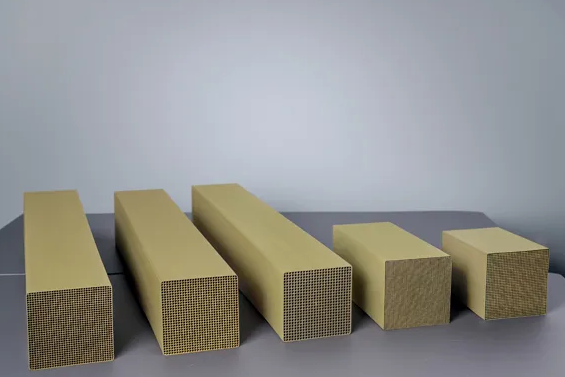
SCR relies on a catalytic reaction between NOx, ammonia (or urea), and oxygen at the catalyst surface. The catalyst has an optimal temperature window — outside this range, conversion drops and ammonia slip increases.
| Temperature Zone | SCR Catalyst Behavior | Risk |
|---|
| Too cold (below minimum) | Catalyst activity drops significantly; reaction incomplete | Ammonia slip; NOx targets missed |
| Optimal range | Maximum NOx conversion; low ammonia slip | Target operating zone |
| Too hot (above maximum) | Catalyst sintering and deactivation begins | Premature catalyst aging; performance loss |
For conventional high-activity catalysts, the typical operating window is 300–420°C. For low-temperature SCR catalysts developed for 2026 retrofit applications, the window can extend down to 150–250°C — enabling installation after the air preheater or in cooler tail-end positions where conventional SCR cannot function.
Placement Logic and Its Cost Implications
| Placement | Temperature at Installation Point | SCR Type Required | Trade-off |
|---|
| Before air preheater (high-dust) | 300–420°C | Conventional SCR | High dust/ash fouling; larger reactor needed |
| After air preheater (low-dust) | 200–350°C | Standard or low-temp SCR | Less fouling; cooler; more constrained temperature range |
| Tail-end (after FGD/ESP) | 100–200°C | Low-temperature SCR only | Cleanest gas; lowest temperature challenge |
Choosing the wrong placement — installing conventional SCR where flue gas temperatures are too low — is a common and expensive mistake. The catalyst underperforms, slip increases, and the system requires costly modification.
SNCR Cost Profile: How SNCR Works and Where It Makes Financial Sense
The SNCR Working Concept
SNCR (Selective Non-Catalytic Reduction) injects aqueous urea or ammonia directly into hot flue gas — typically in the 850–1100°C zone inside or immediately after the furnace. At these temperatures, the reagent reacts with NOx without requiring a catalyst.
The reaction is temperature-sensitive: too hot and the reagent itself oxidizes to form additional NOx; too cool and the reaction is incomplete, causing ammonia slip.
SNCR Cost Advantages
| SNCR Advantage | Detail |
|---|
| Lower CAPEX | No reactor vessel, no catalyst, no large structural modification |
| Faster retrofit | Installation typically possible during a short scheduled outage |
| Simpler permitting | Fewer major equipment additions in most jurisdictions |
| No catalyst replacement cost | Eliminates the periodic catalyst lifecycle cost |
SNCR OPEX Realities
| OPEX Factor | Detail |
|---|
| Reagent consumption | Urea or ammonia consumption per tonne NOx removed is significant — normalized reagent cost is a key metric |
| Ammonia slip control | Injection must be tuned carefully; excessive slip causes secondary pollution and regulatory issues |
| Tuning labor | Load changes, fuel switches, and seasonal temperature shifts require regular injection point and rate adjustment |
| NOx reduction ceiling | Typically 30–50% reduction in a single stage — insufficient for tight emissions standards without additional treatment |
Best-Fit Applications for SNCR
Moderate NOx reduction targets (30–50% from baseline)
Boilers with tight space constraints that cannot accommodate an SCR reactor
Projects with short compliance timelines requiring rapid deployment
Sites where fuel varies and flue-gas temperatures are consistently in the SNCR reaction zone
SCR Temperature and Catalyst Strategy: Why SCR Delivers Lower Long-Term Cost Per Ton
The SCR Working Concept
SCR uses a catalyst — typically vanadium/titanium-based or zeolite-based for low-temperature applications — to enable the NOx reduction reaction at temperatures significantly below the SNCR window. This allows:
NOx removal efficiency of 80–95% in a single stage
Stable, controllable performance across varying loads
Lower ammonia consumption per tonne NOx removed (higher selectivity)
Why Low-Temperature SCR Is a 2026 Priority
Conventional SCR requires placement in the high-temperature zone before or near the air preheater — in high-dust positions that accelerate catalyst fouling, plugging, and erosion. Many retrofit projects lack this space or cannot afford the associated structural work.
Low-temperature SCR catalysts operating at 150–280°C enable tail-end placement:
Flue gas is cleaner after particulate control — less fouling
Lower pressure drop across the catalyst bed
More flexible installation in existing ductwork without major civil work
Applicable to gas turbine exhaust, industrial boilers, and cement kilns where tail-end temperatures match the low-temp window
SCR OPEX Cost Levers
| OPEX Factor | Low-Temperature SCR Characteristic |
|---|
| Catalyst life | 3–7 years typically; influenced by SOx, particulate, and operating temperature stability |
| Ammonia slip | Well-controlled with proper catalyst sizing and injection optimization |
| Pressure drop | Lower at tail-end vs high-dust position; but must be budgeted in system design |
| Ash/soot fouling | Reduced at tail-end; periodic sootblowing or washing may still be required |
| Reagent consumption | Lower per tonne NOx removed compared to SNCR due to higher conversion efficiency |
SNCR vs. SCR Decision Matrix: Compliance Targets and Operating Mode
Key Decision Inputs
| Input | SNCR Fit | SCR Fit |
|---|
| Required NOx reduction | Up to 50% | 60–95% |
| Baseline NOx level | Moderate — reduction target is achievable with SNCR | High — needs high removal efficiency |
| Available capital budget | Lower — SNCR is CAPEX-light | Higher — SCR reactor and catalyst investment |
| Available installation space | Limited — SNCR needs only injection lances | More — SCR needs reactor vessel and catalyst housing |
| Load flexibility and cycling | High variability — SNCR needs constant retuning | Manageable — SCR is more stable across loads |
| Fuel sulfur and ash | High sulfur and ash — increases catalyst degradation risk | Requires pretreatment or ash-tolerant catalyst |
| Compliance timeline | Short — SNCR faster to commission | Longer — SCR requires more engineering lead time |
The Hybrid Option
Some plants achieve the lowest total cost by combining both technologies:
SNCR provides 30–40% bulk NOx reduction using existing hot-zone injection
SCR trim stage treats the remaining NOx with a smaller catalyst volume than a standalone SCR would require
Result: lower CAPEX than full SCR, better performance than SNCR alone, lower reagent consumption than either technology in isolation
This hybrid approach is particularly relevant when upgrading from existing SNCR to meet tightened emissions standards without full SCR replacement.
SCR Temperature Procurement Checklist: Choosing a Low-Temperature SCR Catalyst
Data to Request from Catalyst Vendors
| Data Item | Why Required |
|---|
| Recommended temperature window (minimum, optimal, maximum) | Confirms catalyst activity at your flue-gas temperature profile |
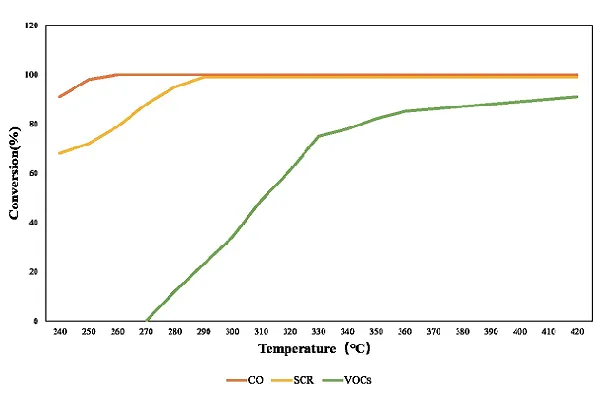
| NOx conversion efficiency curve vs temperature | Allows performance calculation at varying load conditions |
| Ammonia slip specification at design conditions | Required for regulatory reporting and secondary impact assessment |
| Expected catalyst life at your operating conditions | Calculates lifecycle cost per tonne NOx removed |
| SOx and dust tolerance limits | Determines pretreatment requirement |
| Pressure drop at design face velocity | Required for fan capacity and ductwork design |
Engineering Checks Before Specification
Reactor sizing: face velocity, catalyst volume, and geometric configuration to achieve target conversion
Pressure drop budget: confirm the induced draft fan has sufficient capacity margin for the catalyst bed at end-of-life (higher pressure drop)
Access for maintenance: catalyst replacement requires crane access and offline time — plan this into the maintenance schedule
Bypass provisions: may be required for start-up conditions or catalyst regeneration periods
Commissioning and Performance Verification
| Step | What to Confirm |
|---|
| Baseline NOx measurement | Pre-SCR NOx at design load — confirms the reduction target is achievable |
| Ammonia injection mapping | Optimize AIG (ammonia injection grid) distribution across reactor face |
| NOx and slip monitoring | Continuous NOx at outlet; periodic ammonia slip measurement |
| Performance guarantee verification | Confirm vendor performance guarantee conditions are being met within the commissioning period |
Conclusion
SNCR and SCR can both be cost-effective when matched to the right compliance target and boiler conditions. SNCR delivers the fastest, lowest-CAPEX path to moderate NOx reduction and suits projects with tight timelines and space constraints. SCR provides higher removal efficiency and more stable long-term compliance when the SCR temperature window and catalyst selection fit the flue-gas profile — and low-temperature SCR catalysts are expanding the range of applications where SCR is now viable without high-temperature placement. The best decision comes from modeling total cost across CAPEX, reagent, catalyst lifecycle, and downtime risk.
FAQ
Q1: What is SNCR and how does it differ from SCR?
SNCR (Selective Non-Catalytic Reduction) injects urea or ammonia into hot flue gas at 850–1100°C, relying on temperature-driven chemistry to reduce NOx without a catalyst. SCR uses a catalyst to enable the same reaction at lower temperatures (150–420°C depending on catalyst type) with significantly higher NOx conversion efficiency. The key trade-off is SNCR's lower CAPEX against SCR's higher removal efficiency and better long-term performance stability.
Q2: Why is SCR temperature so critical to system performance?
The catalyst's ability to convert NOx is strongly temperature-dependent. Outside the catalyst's optimal temperature window, conversion efficiency drops and unreacted ammonia passes through as slip. For conventional catalysts this window is approximately 300–420°C; for low-temperature catalysts it extends down to 150–250°C. Installing any SCR system without confirming the flue-gas temperature at the catalyst face matches the catalyst's active range results in underperformance.
Q3: Which is cheaper — SNCR or SCR?
SNCR typically has lower CAPEX and faster installation. SCR requires larger capital investment in reactor, catalyst, and associated engineering. However, if high NOx removal is required, SNCR alone cannot meet the target and the combined cost of operating SNCR at its removal ceiling plus compliance penalties can exceed the SCR investment. Total cost over the compliance period — not equipment cost alone — determines which is cheaper for a specific project.
Q4: Can SNCR and SCR be combined in one system?
Yes. A hybrid SNCR plus SCR trim system uses SNCR for bulk reduction (30–40%) and a smaller SCR catalyst bed to trim the remaining NOx to the compliance target. This approach requires less catalyst volume than a standalone SCR, lower CAPEX than a full SCR retrofit, and often achieves better reagent efficiency than SNCR alone. It is particularly well-suited for upgrading existing SNCR systems to meet tightened standards.
Q5: What information is needed to evaluate a low-temperature SCR catalyst?
Provide the flue-gas temperature profile at the proposed installation point across the full load range, baseline NOx concentration and emissions compliance target, dust and particulate loading at the catalyst face, SOx concentration, available reactor space and pressure drop budget, and any constraints on maintenance access or shutdown frequency. This data allows the catalyst supplier to recommend the correct catalyst formulation, volume, and geometric configuration for your specific application.
 English