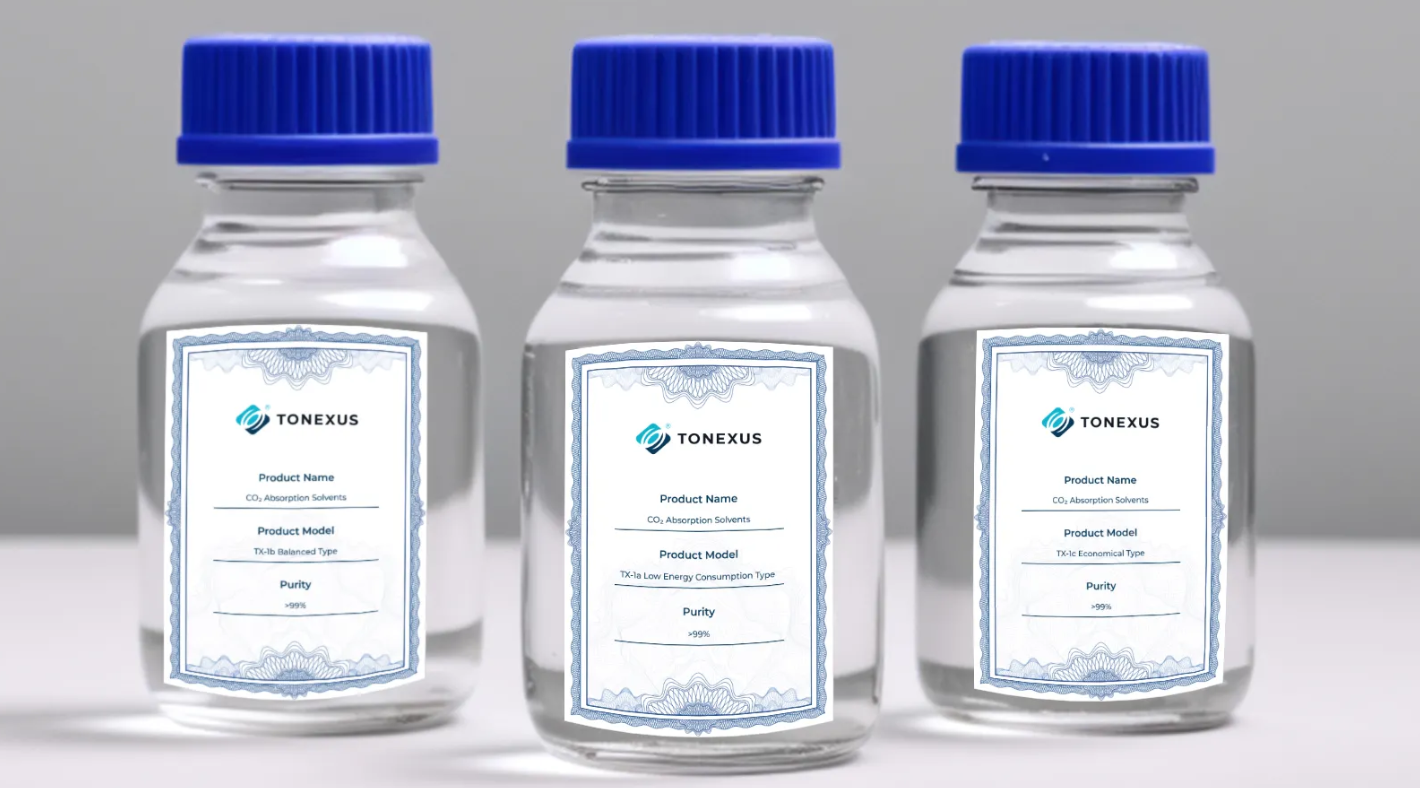
For most post-combustion carbon capture projects, operating cost is dominated by energy — especially the steam or equivalent heat required to regenerate solvent in the stripper. That energy penalty can decide whether a project is bankable. Next-generation solvent chemistry is designed to lower regeneration energy, maintain high CO₂ capacity, and reduce degradation and corrosion costs over time. This guide explains what makes the best solvent for CO2 absorption from an OPEX perspective and what to evaluate before selecting a solvent package.
Best Solvent for CO2 Absorption: Where Carbon Capture OPEX Comes From
The OPEX Breakdown That Determines Project Economics
A post-combustion carbon capture plant operating cost is not simply "solvent cost." The major buckets, ranked by typical contribution, are:
| OPEX Category | Share of Total Operating Cost | Key Driver |
|---|
| Regeneration heat (steam) | 50–70% | Reboiler duty in the stripper — directly linked to solvent properties |
| Electrical power (blowers, pumps, compressors) | 10–20% | Flue gas volume, system pressure drop, CO₂ compression to pipeline pressure |
| Cooling water | 5–15% | Absorber cooling, condenser duty, lean solvent cooling |
| Solvent makeup | 5–15% | Degradation rate, volatility losses, mechanical carryover |
| Reclaiming and waste disposal | 2–8% | Accumulation of heat-stable salts and degradation products |
Why the Energy Penalty Dominates
The stripper reboiler is heated by steam extracted from the power plant's steam cycle. Every additional GJ of heat consumed by the reboiler per tonne of CO₂ captured represents either additional fuel burn, reduced power output, or both. At scale:
A 500 MW coal plant retrofitted with post-combustion capture may require 3–4 GJ/tonne CO₂ with conventional MEA solvent
A next-gen solvent reducing reboiler duty to 2.5 GJ/tonne saves 0.5–1 GJ/tonne across millions of tonnes per year
At typical steam values of USD 15–25/GJ, the annual saving on a large plant is tens of millions of dollars
Solvent selection is therefore a system-level decision with major financial consequences — not a procurement afterthought.
Carbon Capture Solvent Principles: How Next-Gen Chemistry Lowers Regeneration Energy
What Next-Gen Solvent Development Targets
Conventional monoethanolamine (MEA) at 30 wt% has been the benchmark for decades. Its limitations — high regeneration energy, oxidative degradation, and corrosivity — define the targets for improved solvent formulations.
| Performance Property | Conventional MEA | Next-Gen Solvent Goals |
|---|
| Cyclic CO₂ capacity (mol CO₂/mol amine) | ~.35–0.40 | 0.45–0.60 or higher |
| Reboiler specific duty (GJ/tonne CO₂) | 3.5–4.2 | 2.0–3.0 |
| Heat of absorption (kJ/mol CO₂) | ~80 | 60–70 for lower energy demand |
| Absorption rate | Moderate | Maintained or improved |
| Degradation rate | Moderate to high | Significantly reduced |
| Corrosivity | Moderate — requires inhibitors | Lower — reduced inhibitor cost |
The Cyclic Capacity Lever
Higher cyclic capacity means more CO₂ is absorbed per kilogram of solvent per cycle, so less solvent must be circulated through the absorber-stripper loop for the same CO₂ removal rate. Lower circulation rate means:
Smaller pumps and lower pump power consumption
Less heat exchange area required
Lower lean and rich solvent flow rates through the heat exchanger, reboiler, and condenser
Smaller absorber column diameter for the same duty
This creates a compounding OPEX reduction — energy savings plus potential capital equipment downsizing for new builds.
The Absorption Rate Trade-Off
Some solvent formulations with lower heat of absorption also have slower CO₂ absorption kinetics, which may require taller absorbers or higher liquid-to-gas ratios to achieve the same capture rate. The optimal solvent for a specific project is the one that minimizes total OPEX — not just regeneration energy in isolation.
Best Solvent for CO2 Absorption: Degradation, Corrosion, and Makeup Cost Control
The Hidden OPEX Drivers That Change Total Economics
Projects that select a solvent based on regeneration energy alone often discover that degradation and corrosion costs materially change the total cost picture over a 20-year plant life.
| Hidden OPEX Driver | Mechanism | Cost Consequence |
|---|
| Oxidative degradation | Oxygen in flue gas attacks amine molecules | Continuous makeup cost; degradation product disposal |
| Thermal degradation | Reboiler hot surfaces break down amine chemistry | Accelerated at high temperatures; reduces effective capacity over time |
| Heat-stable salt accumulation | Degradation products form non-regenerable salts with CO₂ capacity | Reduces effective loading; requires reclaiming |
| Foaming | Degradation products lower surface tension | Increases carryover, liquid flooding, operational instability |
| Corrosion | Degradation products and amine chemistry attack carbon steel | Materials cost, inspection cost, unplanned maintenance |
What to Evaluate in Solvent Degradation Performance
Oxygen scavenger requirement: some next-gen solvents have lower oxidative degradation rates intrinsically; others require additive management
Thermal stability threshold: the maximum reboiler temperature the solvent tolerates without accelerated degradation — typically 120–135°C for most amines
Reclaiming strategy: batch reclaiming versus continuous thermal reclaimer; frequency and operational cost
Impurity tolerance: real flue gas from coal or gas plants contains SOx, NOx, fly ash, and particulates; confirm the solvent's tolerance and the pretreatment requirement
The Longer Solvent Life Payoff
A solvent with 20% lower degradation rate over a 20-year project life compounds significantly:
Lower annual makeup volume
Less frequent reclaiming campaigns
Fewer waste streams requiring disposal or treatment
Fewer chemistry-related shutdowns
Carbon Capture Process Integration: Solvent Choice Versus Flue Gas Conditions
Why Flue Gas Conditions Drive Solvent Selection
The best solvent for CO2 absorption in a laboratory test may not be the best solvent under real plant conditions. The following flue gas parameters must be defined before any solvent selection is final:
| Flue Gas Parameter | Impact on Solvent Performance | Design Implication |
|---|
| CO₂ concentration (vol%) | Higher concentration means smaller absorber for same duty | Low-CO₂ flue gas (gas turbines at 3–4%) needs different approach than coal at 12–14% |
| Temperature at absorber inlet | High temperature reduces absorption driving force | Cooling required to 40–55°C typical; cooling capacity is a plant constraint |
| Oxygen content | Higher O₂ accelerates oxidative degradation | Influences choice of oxidation-resistant solvent or required inhibitor dosing |
| SOx and NOx | React with amines to form heat-stable salts | Pretreatment FGD and SCR strongly recommended; without it, solvent degradation accelerates rapidly |
| Particulate content | Foaming promoter; increases mechanical carryover | Particulate control to less than 10 mg/Nm³ before absorber inlet |
Retrofit vs. New Build Constraints
For retrofit projects, available steam is often the binding constraint. If the host plant cannot provide sufficient low-pressure steam without significant derating, selecting a lower-energy solvent becomes even more critical — it may be the difference between retrofit feasibility and infeasibility.
Best Solvent for CO2 Absorption Selection Checklist: Trials and Comparison
Data to Request from Solvent Suppliers
| Data Item | What It Confirms |
|---|
| Reboiler specific duty at your CO₂ concentration and capture rate | Energy performance at your actual conditions — not a generic benchmark |
| Cyclic CO₂ loading (rich − lean loading) | Effective capacity per circulation volume |
| CO₂ absorption rate (kinetics) | Determines required absorber height or packing volume |
| Thermal and oxidative stability test data | Degradation rate expectation at operating conditions |
| Corrosion rate data at operating temperature and concentration | Materials-of-construction guidance |
| Recommended operating window | Temperature, concentration, loading limits |
Pilot Trial KPI Tracking
Before committing to a solvent for commercial scale, a bench or pilot trial should track:
| KPI | Measurement | Target |
|---|
| Steam per tonne CO₂ | Reboiler heat duty ÷ CO₂ capture rate | Compare against supplier performance estimate |
| Solvent loss rate | Makeup volume per tonne CO₂ | Confirm against degradation rate projection |
| Heat-stable salt accumulation | Periodic titration of reclaimer feed | Rate should match or beat supplier specification |
| Corrosion indicators | Coupon weight loss; iron/nickel in solvent | Confirm materials specification is appropriate |
| Foaming tendency | Foam test and visual observation | Absence of operational instability |
Conclusion
Reducing the energy penalty is the fastest lever to improve carbon capture economics. The best solvent for CO2 absorption is the one that minimizes steam demand and solvent losses while staying stable under your real flue-gas conditions over a 20-year plant life. To choose with confidence, compare solvent options using a comprehensive OPEX model that includes energy, makeup, reclaiming, corrosion risk, and pretreatment cost — not just headline absorption performance — and validate through a pilot trial before committing to commercial scale.
FAQ
Q1: Why is the energy penalty so important in carbon capture project economics?
The heat required to regenerate solvent in the stripper — typically provided as low-pressure steam extracted from the power plant cycle — is the largest single operating cost in post-combustion capture. It can reduce the net power output of a thermal plant by 20–30% and represents USD 15–40 per tonne CO₂ captured in heat cost alone. Reducing this energy demand is the primary lever to improve project economics and investor returns.
Q2: What makes a solvent the best choice for CO2 absorption from an OPEX perspective?
The optimal solvent minimizes total annualized operating cost — which means low regeneration energy (GJ/tonne CO₂), high cyclic capacity (less solvent to circulate), slow degradation (lower makeup cost), manageable corrosivity (lower materials and inhibitor cost), and stable operation under real flue gas conditions including oxygen and acid gas impurities.
Q3: Do next-generation solvents always outperform conventional MEA?
Not universally. Performance depends strongly on the specific flue gas conditions, available steam pressure and temperature, capture rate target, and impurity levels. Some advanced solvents that show excellent performance on clean test gas underperform or degrade rapidly on real flue gas with high oxygen or SOx content. Pilot testing under actual plant conditions is essential before committing to any solvent for commercial deployment.
Q4: What non-energy costs should be included when comparing solvents?
Include annual solvent makeup volume and cost, reclaiming campaign frequency and operating cost, heat-stable salt disposal, corrosion inhibitor consumption, materials-of-construction upgrades required by more aggressive solvents, foaming management chemical cost, and any additional pretreatment (SOx removal, cooling) required by the solvent's sensitivity profile.
Q5: How should a solvent be validated before full-scale deployment?
Run a bench-scale or pilot-scale trial on representative flue gas — not synthetic clean gas — for a minimum of 1,000–2,000 hours. Track reboiler specific duty, solvent loss rate, heat-stable salt accumulation rate, corrosion coupon weight loss, and foaming incidents. Compare results against the supplier's performance specifications and use the trial data to build the OPEX model for the commercial scale decision.
 English