Low-temperature Selective Catalytic Reduction (LT-SCR) is an advanced flue gas treatment technology designed to remove Nitrogen Oxides (NOx) at operating temperatures between 150°C and 350°C. Unlike conventional SCR systems that require reheating flue gas to over 300°C, LT-SCR utilizes high-activity catalysts to achieve up to 95% NOx removal efficiency directly. This allows industrial plants to meet strict emission standards while eliminating the high fuel costs and carbon emissions associated with supplemental reheating.
1. Introduction: The Strategic Shift to Low-Temperature DeNOx
As global environmental regulations—such as the EPA's Clean Air Act and the EU’s Industrial Emissions Directive—become increasingly stringent, industrial facilities are under immense pressure to lower NOx emissions. However, modern industrial processes are also striving for higher energy efficiency. This creates a technical conflict: high-efficiency heat recovery often leaves the flue gas “cold” (below 250°C), while traditional DeNOx systems require “heat.”LT-SCR solves this paradox. By operating at the native exit temperature of the boiler or furnace, it removes the need for duct burners, thereby reducing both Capital Expenditure (CAPEX) and Operating Expenditure (OPEX). For engineers and plant managers, understanding the nuances of catalyst selection and system configuration is key to a successful retrofit.
2. Technical Comparison: Conventional SCR vs. LT-SCR
To understand why LT-SCR is a breakthrough, we must compare it to the industry standard. Conventional SCR is robust but energy-hungry when applied to low-temperature streams.
Table 1: Operational Comparison of SCR Technologies
| Feature | Conventional SCR | Low-Temperature SCR (LT-SCR) |
|---|
| Operating Temp Range | 300°C – 420°C | 150°C – 350°C |
| Catalyst Base | Vanadium-Titanium (V₂O₅/TiO₂) | Modified Vanadia, Manganese, or Zeolite |
| Energy Requirement | High (Requires reheating cold gas) | Low (Uses native gas temperature) |
| ABS Formation Risk | Low (Above dew point) | Moderate/High (Requires precise control) |
| System Footprint | Large (Due to reheating equipment) | Compact (Integrated into existing ducts) |
| Primary Advantage | High durability in high-dust | Extreme energy savings and ROI |
3. How LT-SCR Works: The Chemistry of Efficiency
The fundamental reaction remains the same: Nitrogen Oxides (NO and NO₂) react with a reducing agent (typically Ammonia, NH₃, or Urea) in the presence of a catalyst to form harmless Nitrogen (N₂) and Water (H₂O).The chemical equations:
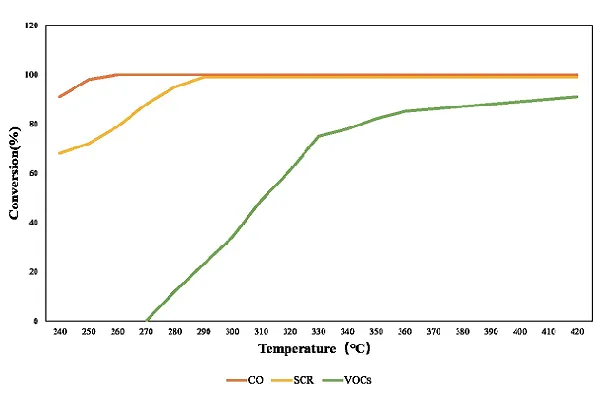
The “magic” of LT-SCR lies in the catalyst’s surface chemistry. At lower temperatures, the reaction rate naturally slows down. LT-SCR catalysts compensate for this by having a significantly higher surface area and increased “active sites” that lower the activation energy required for the reaction to occur. This allows the molecules to react quickly even without the kinetic energy provided by high heat.
4. Industry Applications: Where is LT-SCR Most Effective?
Not every plant needs LT-SCR, but for those with low-temperature exhaust, it is often the only viable path to compliance.
Table 2: Typical Industrial Applications and Temperature Profiles
| Industry | Flue Gas Temp (°C) | Key Benefit of LT-SCR |
|---|
| Biomass Boilers | 160 – 220 | Handles high moisture without reheating. |
| Glass Furnaces | 180 – 250 | Integrates after waste heat recovery units. |
| Waste-to-Energy | 150 – 200 | Achieves ultra-low NOx after acid gas scrubbing. |
| Sintering Plants | 120 – 180 | Reduces massive energy costs in steel production. |
| Coking Ovens | 170 – 230 | Fits into limited space in brownfield retrofits. |
6. Catalyst Selection: The Heart of the System
Selecting the right catalyst is the difference between a system that lasts five years and one that fails in six months.
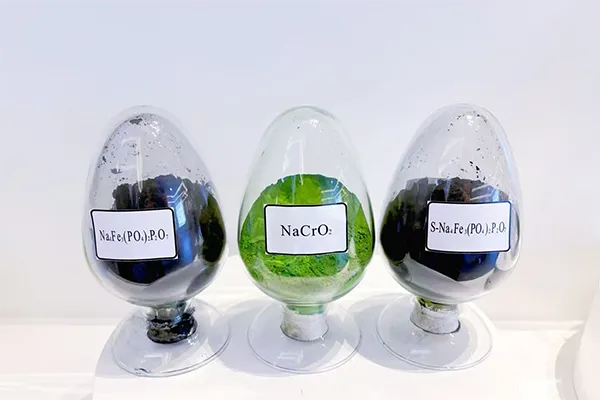
Vanadium-Based (Modified): Best for gases with moderate SO₂ content. It is the most robust but requires a minimum of 180°C to prevent fouling.
Manganese-Based: Exceptional activity at ultra-low temperatures (150°C). However, it is highly sensitive to sulfur and should only be used in “clean gas” applications (post-desulfurization).
Zeolites: Emerging technologies used for specific VOC/NOx combined treatment, offering a wider temperature window but often at a higher price point.
5. Conclusion: Future-Proofing Your Compliance Strategy
As we move toward 2030, the “Low-Carbon” and “Zero-Pollution” agendas are merging. LT-SCR represents the intersection of these two goals. It provides a reliable, high-performance method for NOx control that respects the energy constraints of the modern industrial era. For facilities looking to retrofit existing lines or design new, high-efficiency plants, LT-SCR is no longer a niche technology—it is a proven, cost-effective industry standard.
FAQs: People Also Ask (PAA)
Q: What is the minimum temperature for SCR to work effectively?
A: Traditional SCR requires at least 300°C. However, specialized Low-Temperature SCR (LT-SCR) can operate effectively at temperatures as low as 150°C (300°F), provided the catalyst is specifically formulated for low-temperature activity and sulfur levels are low.Q: Does LT-SCR require more catalyst volume than conventional SCR?
A: Generally, yes. Because the reaction rate is slower at lower temperatures, a larger volume of catalyst (lower Space Velocity) is often required to achieve the same NOx removal efficiency as a high-temperature system.Q: How do you handle sulfur (SO₂) in a low-temperature environment?
A: Sulfur is the primary enemy of LT-SCR. To prevent catalyst poisoning and ABS formation, LT-SCR is ideally placed downstream of a high-efficiency desulfurization system (FGD). If SO₂ is present, the system must be designed with periodic thermal regeneration capabilities.Q: Can LT-SCR be used on coal-fired boilers?
A: It is possible but challenging due to high dust and SO₂. In coal applications, LT-SCR is typically used in a “tail-end” configuration, meaning it is placed after the ESP (Electrostatic Precipitator) and FGD (Flue Gas Desulfurization) where the gas is clean but cool.Q: How long does an LT-SCR catalyst typically last?
A: In a “clean gas” environment (low dust, low SO₂), an LT-SCR catalyst can last 3 to 5 years (24,000 – 40,000 hours). Lifespan depends heavily on temperature stability and the presence of catalyst poisons like arsenic or alkali metals.
References & Technical Resources
Brunner, C. R. (2023). Industrial Emission Control Technology: NOx, SOx, and Particulate Matter. 2nd Edition. McGraw-Hill Education.
Environmental Protection Agency (EPA). (2021). Air Pollution Control Cost Manual: Section 4, Chapter 2 - Selective Catalytic Reduction. https://www.epa.gov/economic-and-cost-analysis-air-pollution-regulations
He, C., & Cheng, J. (2022). Catalytic DeNOx Technologies: From Fundamentals to Applications. Springer Nature Publishing.
International Energy Agency (IEA). (2024). The Role of Low-Temperature SCR in Decarbonizing Heavy Industry. Technical Report. https://www.iea.org/reports/clean-energy-innovation
World Bank Group. (2023). Environmental, Health, and Safety (EHS) Guidelines for Thermal Power Plants. Washington, D.C.
Journal of Environmental Chemical Engineering. (2024). A Review of Manganese-based Catalysts for Ultra-Low Temperature DeNOx. Vol. 12, Issue 3.
 English