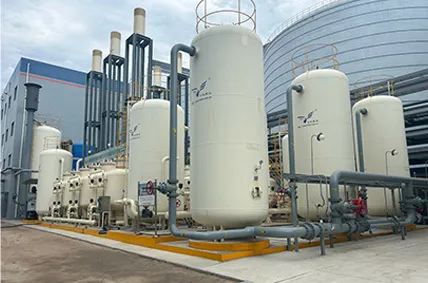
As the world pushes toward carbon neutrality, industries face growing pressure to reduce greenhouse gas emissions. Traditional measures alone—like energy efficiency or renewable energy adoption—cannot fully address emissions from hard-to-abate sectors such as steel, cement, and chemicals. This is where CCUS Solutions—Carbon Capture, Utilization, and Storage—play a critical role. By capturing CO₂, converting it into valuable products, or securely storing it underground, CCUS Solutions offers a comprehensive approach to mitigating climate impact while supporting industrial growth.
The Importance of CCUS Solutions in Industrial Decarbonization
Implementing CCUS Solutions allows industries to actively reduce CO₂ emissions from both point sources and, in some cases, the atmosphere itself. Unlike traditional emission control technologies, CCUS targets carbon at its source or through Direct Air Capture (DAC), making it essential for sectors with diffuse or difficult-to-reduce emissions.
Beyond compliance, CCUS Solutions help businesses strengthen their sustainability credentials. Companies that adopt these solutions demonstrate environmental responsibility, improve ESG performance, and enhance competitiveness in global markets that increasingly value low-carbon practices.
Core Technologies Behind CCUS Solutions
Modern carbon CCUS Solutions combine multiple advanced technologies to maximize carbon reduction:
Carbon Capture: Using post-combustion, pre-combustion, or DAC methods, CO₂ is separated from industrial exhaust gases or directly from ambient air.
Carbon Utilization: Captured CO₂ can be transformed into synthetic fuels, chemicals, or building materials, creating new revenue streams and reducing the environmental footprint.
Carbon Storage: For permanent removal, CO₂ is injected into geological formations such as depleted oil and gas reservoirs or deep saline aquifers.
By integrating these technologies, Tonexus delivers comprehensive CCUS solutions that ensure a full-cycle solution, from capture to utilization or long-term storage, tailored to meet the unique requirements of each industrial facility.
Benefits of Investing in CCUS Solutions
Adopting CCUS Solutions delivers significant advantages beyond emission reduction:
Regulatory Compliance: Helps industries meet strict local and international carbon standards, avoiding penalties.
Economic Opportunities: CO₂ utilization can create commercially valuable products and support new revenue streams.
Operational Resilience: Reduces carbon liabilities and prepares companies for future tightening of global regulations.
Brand and Market Advantage: Demonstrates sustainability leadership, enhancing reputation among partners, investors, and consumers.
Environmental Impact: Reduces greenhouse gas emissions, contributing to global climate mitigation and supporting carbon neutrality goals.
Future Outlook of CCUS Solutions
The future of CCUS Solutions lies in innovation, digitalization, and large-scale deployment. AI-driven monitoring, smart process optimization, and energy-efficient capture systems are improving both cost-effectiveness and performance. Combining DAC with CCUS enables net-negative emissions, removing CO₂ from the atmosphere and helping industries achieve ambitious carbon reduction targets.
Forward-thinking companies that integrate CCUS Solutions today will gain a strategic advantage, balancing sustainability with profitability while positioning themselves as leaders in the emerging low-carbon economy.
Conclusion
CCUS Solutions are not merely environmental tools—they are strategic investments in a cleaner, more sustainable future. By capturing, utilizing, and storing CO₂, industries can reduce emissions, unlock economic value, and meet global carbon reduction goals.
For companies aiming to lead in sustainability and long-term competitiveness, adopting comprehensive CCUS Solutions is the key to thriving in a world increasingly defined by low-carbon innovation.
 English

_20260508151313.webp "TONEXUS Technology Successfully Hosts 2026 Annual Innovation and Growth Conference")
_20260520163431.webp "Benchmark Project | Taisheng (Guizhou) Bamboo Resources Development Co., Ltd. 2400 tds/d Alkali Recovery Boiler Flue Gas Denitrification Project")