As global industries face stricter environmental regulations and rising demands for sustainability, companies must take emission control seriously. One of the key considerations for adopting pollution control systems is the flue gas treatment cost. While cost is often seen as a burden, in reality, investing in effective flue gas cleaning systems brings both economic and environmental benefits, helping businesses secure long-term growth and global competitiveness.
Understanding Flue Gas Treatment Cost in Different Industries
The flue gas treatment cost varies depending on industry type, plant size, emission targets, and chosen technology. For example:
Cement Plants: High levels of dust necessitate robust particulate control systems, which can significantly impact the overall cost.
Coal-Fired Power Plants: Desulfurization (FGD) and DeNOx systems make up the majority of costs.
Waste Incineration: Advanced solutions such as activated carbon injection are needed to capture dioxins, furans, and mercury, slightly raising costs but ensuring compliance with strict EU and U.S. standards.
It is essential to see the cost not as a one-time expense but as an investment that ensures business continuity, avoids fines, and improves corporate image in the global marketplace.
Key Factors Affecting Flue Gas Treatment Cost
When calculating the flue gas treatment cost, several factors need to be considered:
Technology Selection: Wet or dry desulfurization, SCR or SNCR for DeNOx, ESP or bag filters for dust—all come with different cost levels and efficiencies.
Plant Capacity: Larger plants require bigger systems and higher capital investment, but they often achieve better cost efficiency per unit of output.
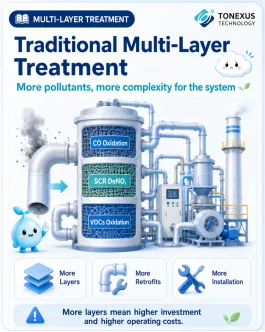
Emission Standards: Stricter local or international regulations may require advanced multi-stage systems, increasing costs but ensuring long-term compliance.
Operation & Maintenance: Energy consumption, reagent use (like lime or ammonia), and system maintenance also influence the total cost of ownership.
By carefully balancing these factors, industries can achieve an optimized flue gas treatment system that is both cost-effective and environmentally sound.
How Flue Gas Treatment Cost Brings Long-Term Benefits
Although the initial flue gas treatment cost can seem high, the long-term benefits far outweigh the expense:
Regulatory Compliance: Avoid costly penalties, plant shutdowns, and reputational damage.
By-Product Recovery: Processes like desulfurization produce gypsum, which can be sold for use in the construction industry, creating extra revenue.
Energy Efficiency: Modern systems are designed for lower energy consumption, reducing operational costs over time.
Global Market Access: Companies with strong environmental performance are more attractive to international partners and investors.
Corporate Reputation: Demonstrating environmental responsibility strengthens ESG performance and builds trust with customers and stakeholders.
Optimizing Flue Gas Treatment Cost with Smart Solutions
The future of flue gas treatment cost management lies in smarter, more integrated technologies. AI-driven monitoring, automation, and energy recovery systems help optimize operations, reducing both costs and emissions. Companies that embrace innovation in flue gas treatment will not only lower expenses but also stay ahead of competitors in sustainability-driven markets. With a focus on maximizing ROI, Tonexus ensures that every flue gas treatment plant is equipped with proprietary energy-saving designs that significantly lower the total cost of ownership.
Conclusion
The flue gas treatment cost should not be viewed as a financial burden, but rather as a strategic investment in compliance, sustainability, and long-term profitability. From dust removal and desulfurization to NOx reduction and carbon capture, advanced systems deliver both environmental protection and economic value.
Forward-looking companies that prioritize flue gas treatment today will benefit tomorrow—with cleaner air, stronger reputations, and enhanced competitiveness in global markets.
 English